


An oil conservator is an essential protective auxiliary component for oil-immersed transformers. Its primary function is to compensate for volume expansion and contraction of insulating oil caused by temperature fluctuations during transformer operation. It plays a critical role in preserving transformer insulation performance, slowing insulating-oil degradation, and improving overall equipment operational stability.
Under varying load and ambient-temperature conditions, the insulating oil inside a transformer undergoes continuous thermal expansion and contraction. A properly-sized oil conservator keeps the main transformer tank fully filled with oil at all times. It greatly reduces the contact area between insulating oil and ambient air, inhibits oil oxidation and deterioration, blocks moisture ingress into the tank, prevents reduction of internal dielectric strength, and mitigates potential insulation-related failures at the source.

Operational Risks Without an Oil Conservator
Transformers not equipped with a dedicated oil conservator experience frequent oil-level fluctuations inside the main tank, bringing multiple hazards that seriously compromise operational safety:
- Degraded insulation and cooling performance When the oil level drops too low, transformer cores and windings become exposed to air instead of being fully submerged in insulating oil. This directly impairs heat dissipation and breaks down the integrated insulation system.
- Accelerated oxidation and aging of insulating oil Oil-level swing forces repeated air exchange between tank interior and outside atmosphere. Hot surface oil continuously contacts oxygen and moisture, drastically accelerating oxidation and moisture absorption and degrading dielectric properties of the insulating fluid.
- Reduced service life of equipment Long-term oxidative exposure generates oil degradation and contaminants. Apart from weakening insulation and cooling capacity, deteriorated oil corrodes internal critical components, significantly shortening the overall service life of the transformer.
Key Advantages of Dedicated Oil Conservators
Compared with open-type oil-storage structures, purpose-built oil conservators minimize contact between insulating oil and ambient air, fundamentally slowing oil oxidation and moisture uptake. In addition, oil circulation between the conservator and main tank is minimal. Oil inside the conservator remains at relatively low temperature, further suppressing oxidation reactions. This effectively extends service life for both insulating oil and the transformer, and cuts equipment maintenance costs.
Main Types & Characteristics of Oil Conservators
1. Corrugated-type Oil Conservator
The corrugated-type conservator adopts flexible corrugated expansion plates. Elastic deformation of corrugated sheets automatically absorbs and compensates volume changes from thermal expansion-contraction of insulating oil. Featuring simple, robust construction and reliable sealing, it requires no complicated auxiliary accessories. Suitable for most general-purpose oil-immersed transformers, it balances practicality and stable performance.
2. Bladder-type Oil Conservator
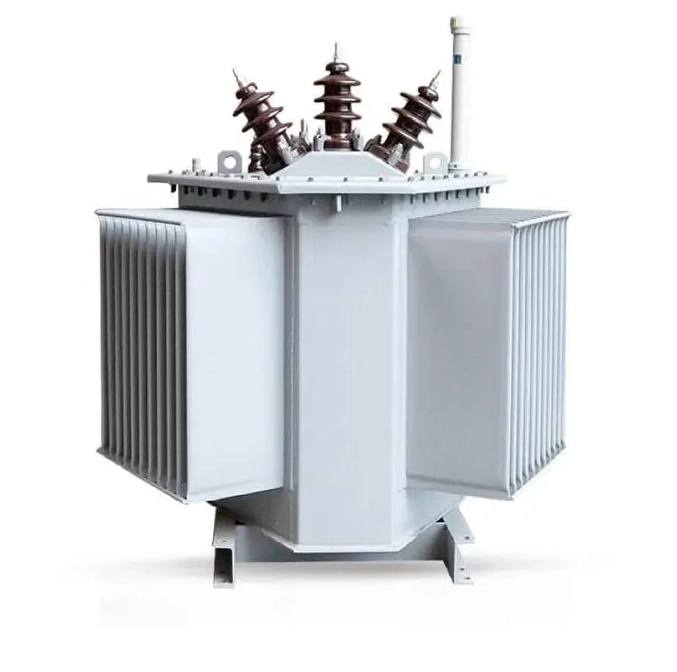
The standout feature of the bladder-type conservator is complete oil-air isolation. A built-in miniature bladder at the top forms an independent sealed oil circuit, fully separating insulating oil from outside air and moisture. A dedicated oil-level indicator provides precise level feedback: When insulating oil expands under rising temperature and oil level goes up, the bladder is compressed and internal pressure rises, and the oil-level indicator moves upward accordingly. When temperature drops and oil volume shrinks, the bladder expands automatically, pressure decreases, and the indicator reading falls. It delivers accurate, proportional real-time oil-level indication with high-precision protection.
3. Diaphragm-type Oil Conservator
The diaphragm-type conservator is fitted with a flexible diaphragm assembly and matching magnetic oil-level gauge. Roller mechanisms above the diaphragm slide friction-free to capture minor oil-level variations, delivering sensitive detection and stable performance. Special alarm switches are integrated inside the oil-level gauge terminal box for intelligent protection. When oil level hits high-limit or low-limit thresholds, alarm signals are triggered automatically to alert operation-and-maintenance staff for troubleshooting. It effectively prevents oil shortage and oil overflow failures and delivers comprehensive safeguards for safe and stable transformer operation.
Conclusion
An oil conservator is essential for oil-immersed transformers, compensating for insulating-oil volume changes while reducing exposure to air and moisture. By limiting oxidation, moisture ingress and insulation degradation, it helps maintain insulation performance, extend transformer service life and improve operational stability. Corrugated-type, bladder-type and diaphragm-type conservators offer different approaches to oil expansion management, oil-air isolation and level monitoring, making proper selection important for reliable transformer operation.
For transformer projects requiring reliable equipment and professional support, QXG provides transformer solutions designed to meet the needs of customers across North America and Latin America, helping support safe and stable power system operation.