


Reliable electricity is essential for modern residential communities. From lighting and household appliances to elevators, HVAC equipment, water pumps, security systems, and emergency lighting, residential developments depend on transformers to safely distribute power from the utility network to individual buildings and homes.
A residential transformer steps medium-voltage utility power down to the lower distribution voltage required by homes, apartment buildings, condominiums, and other residential facilities.
For larger developments and multi-family complexes, pad mounted transformers are commonly used because they provide secure outdoor installation, reliable power distribution, and convenient access for inspection and maintenance.
What Is a Residential Transformer?
A residential transformer is a distribution transformer used to supply electricity to residential properties. It converts electricity from the utility distribution voltage to a voltage suitable for the local electrical system.
Residential transformers can serve different applications, including:
- Single-family neighborhoods
- Apartment buildings
- Condominium developments
- Townhouse communities
- Gated residential communities
- Mixed-use developments
- Multi-family housing complexes
The appropriate transformer capacity and configuration depend on the number of residences, estimated electrical demand, utility requirements, HVAC loads, elevators, EV charging infrastructure, and other equipment.
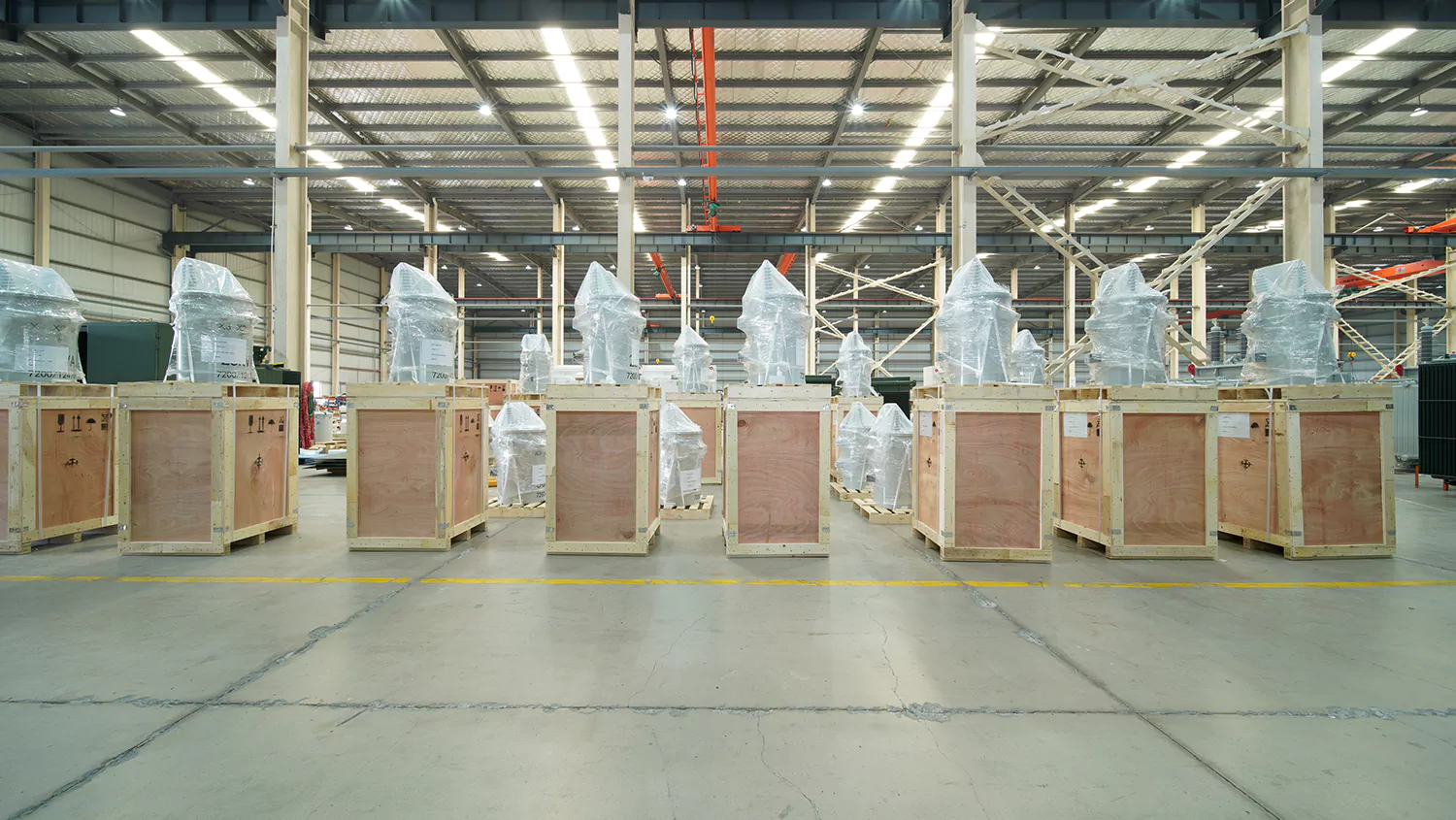
Why Are Pad Mounted Transformers Used in Residential Areas?
Pad mounted transformers are particularly suitable for developments with underground electrical distribution.
Instead of being installed on utility poles, these transformers are mounted on concrete pads at ground level and enclosed in tamper-resistant metal cabinets.
This design provides several advantages for residential projects.
Safety in Public Areas
Residential transformers may be installed near sidewalks, parking areas, landscaped spaces, apartment buildings, or other locations accessible to residents.
A tamper-resistant enclosure helps prevent unauthorized access to energized components and improves safety around the equipment.
Proper transformer location, clearances, grounding, protection, and installation should always follow applicable utility requirements, electrical codes, and project specifications.
Low-Noise Operation
Noise is an important consideration in residential environments.
Transformers installed close to apartments or houses should be appropriately specified and located to minimize disturbance to residents. Transformer design, core construction, loading, installation location, barriers, and surrounding structures can all influence perceived sound levels.
For projects with strict acoustic requirements, low-noise transformer specifications can be considered during the engineering stage.
Compact Outdoor Installation
Pad mounted transformers are designed for outdoor installation and can be incorporated into residential site planning without requiring a dedicated indoor transformer room.
This makes them practical for apartment complexes, residential neighborhoods, and developments where usable building space is valuable.
Residential and Multi-Family Loads
Unlike a small individual home, a large apartment complex can have a diverse electrical load profile.
The transformer may need to support household electricity together with common-area and building systems such as elevators, HVAC systems, corridor lighting, emergency lighting, water pumps, access-control systems, parking facilities, and EV chargers.
Transformer sizing should therefore be based on calculated demand rather than simply the number of apartments.
Engineers should consider peak demand, load diversity, motor starting requirements, future expansion, EV charging plans, and other significant loads when determining the required transformer capacity.
Live Front Transformers for Residential Projects
Depending on utility and project requirements, live front pad mounted transformers can be used for residential power distribution.
A live front configuration uses exposed medium-voltage connection points inside the locked transformer compartment. Because these components are accessible after the enclosure is opened, operation and maintenance should only be performed by appropriately qualified personnel following the required electrical safety procedures.
For buyers, the choice between live front and dead front configurations should be determined according to utility standards, voltage class, switching requirements, maintenance practices, and the project’s electrical design.
Vegetable-Based Insulating Fluid
Insulating fluid is another consideration when specifying a residential transformer.
Natural ester or vegetable-based insulating fluids can offer a high fire point and favorable environmental characteristics compared with conventional mineral oil. These properties may make ester-filled transformers attractive for certain residential developments where fire safety, environmental considerations, or transformer location are important.
However, insulating fluid selection should always be evaluated against the transformer design, local codes, utility specifications, fire-safety requirements, and operating conditions.
Transformers for Harsh Climatic Conditions
Residential transformers may remain outdoors for decades, so environmental conditions need to be considered during specification.
Depending on the project location, transformers may be exposed to high or low temperatures, rain, snow, humidity, salt air, dust, or other environmental factors.
The enclosure, coating system, insulation, seals, accessories, and other components should therefore be selected according to the actual installation environment.
For North American residential projects, manufacturers should also understand the applicable IEEE requirements, utility specifications, and other project-specific standards.
How to Choose a Residential Transformer
There is no single transformer specification suitable for every residential development. Before requesting a quotation, developers, utilities, EPC contractors, and electrical engineers should determine several key parameters.
These normally include transformer capacity (kVA), primary voltage, secondary voltage, phase, frequency, impedance, feed configuration, insulating fluid, winding material, installation environment, noise requirements, accessories, and applicable standards.
For multi-family developments, expected future loads should also be considered. For example, increasing adoption of electric vehicles can significantly affect future electrical demand in apartment parking facilities.
Providing a single-line diagram and detailed transformer specification can help the manufacturer select or engineer the appropriate solution.
Residential Transformer Manufacturing and Delivery
Transformer delivery can directly affect a construction schedule. Delays in electrical equipment may prevent testing, commissioning, or occupancy even when other parts of a residential development are complete.
For this reason, transformer buyers should evaluate not only product specifications but also the manufacturer’s production capability, quality control, testing procedures, engineering support, documentation, and delivery schedule.
Clear communication between the transformer supplier, electrical engineer, EPC contractor, utility, and project developer can reduce specification errors and help keep the project on schedule.
Custom Residential Transformer Solutions from QXG TECHNOLOGY
QXG TECHNOLOGY provides transformer solutions for residential neighborhoods, apartment buildings, multi-family complexes, and other residential developments in North America.
Live front pad mounted transformers can be configured with tamper-resistant enclosures, low-noise designs, vegetable-based insulating fluid, service-friendly layouts, and project-specific electrical parameters. QXG also supports customized voltage, capacity, impedance, winding material, accessories, testing, and engineering documentation according to project requirements.
For developers, EPC contractors, utilities, or electrical engineers sourcing a residential transformer or pad mounted transformer for a multi-family project, send your transformer specifications or single-line diagram to info@gxgelec.com for technical discussion and quotation.