This article compares copper and aluminum windings for oil-immersed transformers from material performance and operational aspects, to support transformer selection for power projects.
Distribution transformers are core equipment in power transmission and distribution networks. Operating losses of transformers mainly consist of winding copper losses and core iron losses. Reducing transformer losses helps cut energy waste and improve equipment efficiency, which is a key focus of energy-saving transformer design. This article introduces mainstream technical measures for loss reduction from two aspects: copper loss reduction and iron loss reduction.
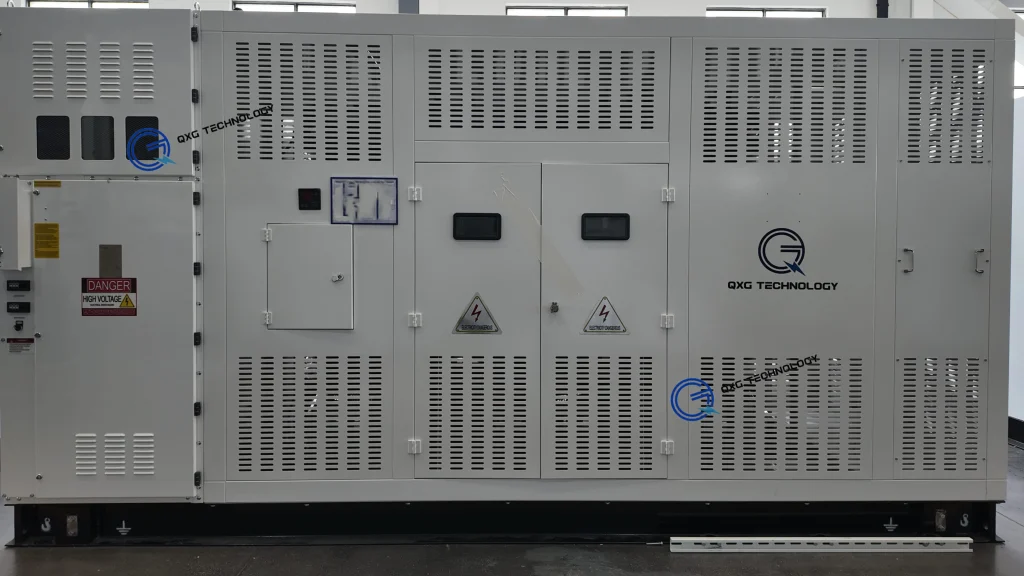
Dry-type transformers are widely used in commercial buildings, data centers, industrial power distribution, rail transit and other applications. Unlike oil-immersed transformers, dry-type transformers feature oil-free and fire-resistant properties. The matching enclosure is an indispensable component for dry-type transformers, which plays a vital role in stable equipment operation, personal safety and extending service life.
Learn about transformer bushings, including their functions, selection criteria, and classifications such as dead-front and live-front designs for safe and reliable power system operation.
Learn how transformer taps regulate voltage, compensate for grid fluctuations, and improve power system stability through off-load and on-load tap changer technologies.
Explore transformer source and load side functions, including grid adaptability, load management, protection coordination, and their role in ensuring stable power system operation.
QXG has successfully delivered multiple three-phase pad-mounted transformers to the Philippines, featuring a voltage rating of 34.5/0.46kV and capacities ranging from hundreds to thousands of kVA. These transformers have been operating reliably within urban power distribution networks, demonstrating the excellent performance, reliability, and environmental adaptability of QXG products in tropical regions.
The rapid growth of data centers and the increasing electrification of U.S. infrastructure have placed unprecedented demands on power distribution systems. In these high-stakes environments, transformer bushings play a critical role. These components do more than just manage electrical stress; they are fundamental to the physics of power distribution itself.
Different coil designs offer different advantages. Disc-type coils provide excellent heat dissipation, while layer-type coils offer higher mechanical strength. The shape and structure of the core also affect how efficiently current flows. Understanding how the core and coils work is the first step in choosing the right transformer.
Pad-mounted transformers quietly power neighborhoods, commercial districts, industrial facilities, and infrastructure systems around the world. Although they are rarely noticed in daily life, they operate continuously under demanding electrical and environmental conditions. To ensure stable performance and long service life, routine maintenance is not optional—it is a critical requirement for reliable power distribution.
Liquid-filled transformers rely on insulating fluid for their smooth operation. This fluid provides cooling, insulation, and lubrication. Among the various insulating oil options available today, FR3® natural ester fluid is rapidly becoming the ideal choice for oil-filled transformers.