


Data centers operate around the clock, making reliable electrical infrastructure essential. From hyperscale facilities and colocation campuses to smaller edge data centers, every site requires a stable power distribution system capable of supporting high loads, redundancy, future expansion, and sensitive IT equipment.
A data center transformer is a critical part of this infrastructure. It steps incoming utility or medium-voltage power down to the voltage required by the facility while helping maintain safe and dependable power distribution.
For many North American data center projects, pad mounted transformers provide a practical solution because they combine high capacity, outdoor installation, secure construction, and flexible configuration.
What Is a Data Center Transformer?
A data center transformer is a power transformer designed or configured to meet the electrical requirements of data center facilities.
Unlike many conventional commercial buildings, data centers typically have high power density and operate continuously. Transformer selection therefore needs to consider not only rated capacity but also load growth, redundancy, cooling, efficiency, voltage requirements, impedance, protection, monitoring, and integration with the overall electrical distribution system.
Depending on the project, transformers may serve utility entrances, substations, individual data halls, modular power blocks, cooling infrastructure, or other critical loads.
Why Are Pad Mounted Transformers Used in Data Centers?
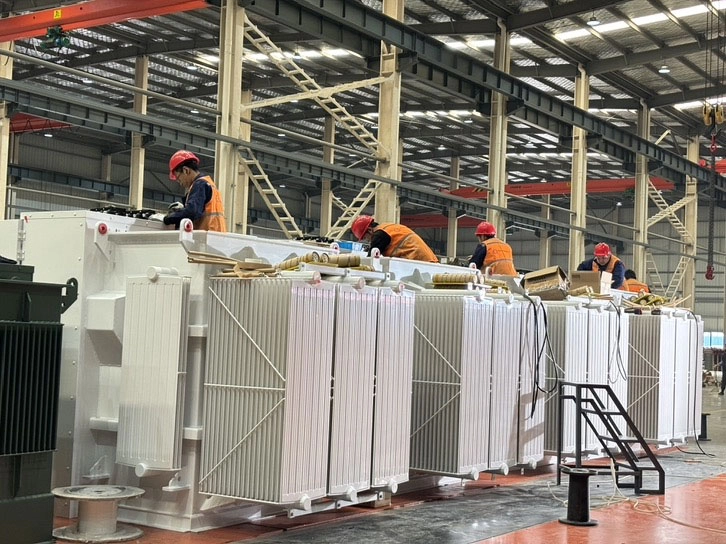
Pad mounted transformers are widely suited to data center campuses where medium-voltage power needs to be distributed safely to different buildings or electrical zones.
Because the transformer and associated high- and low-voltage components are housed in a secure outdoor enclosure, pad mounted designs can reduce the need for dedicated indoor transformer space.
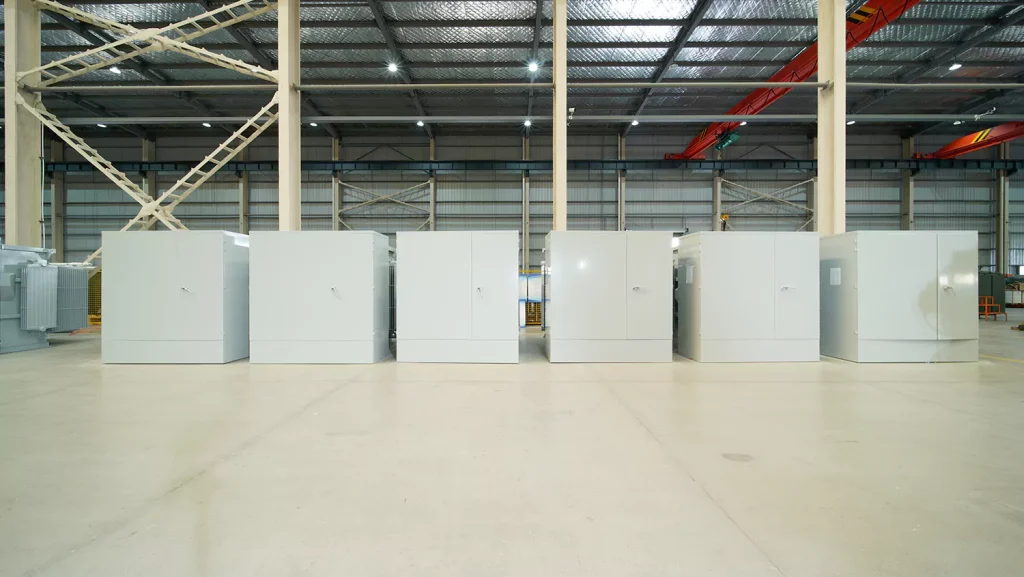
For large campuses, multiple pad mounted transformers can also be deployed as part of a modular power architecture. This makes it easier to expand electrical capacity as additional data halls or IT loads are commissioned.
Key Requirements for Data Center Transformers
1. Continuous and Reliable Operation
Data center infrastructure is expected to operate 24/7. Transformer reliability is therefore a major consideration.
The transformer should be engineered around the actual operating environment, expected loading profile, ambient temperature, electrical system configuration, and redundancy strategy.
Reliable protection assemblies, durable enclosures, appropriate insulation systems, and thorough factory testing can all contribute to long-term operating reliability.
2. Capacity for Changing Loads
Data center power consumption is rarely static. New servers, AI computing clusters, cooling equipment, and future data hall expansion can significantly change facility demand.
Transformer capacity should therefore be selected with both current and expected future loads in mind.
Custom designs can provide different kVA/MVA ratings, voltage combinations, impedance levels, cooling configurations, and other electrical parameters to better match the project’s power architecture.
3. Flexible Cooling
Cooling capability can be especially important for transformers serving high-load data center applications.
An ONAN/ONAF dual cooling design provides additional flexibility. Under normal conditions, the transformer can operate using Oil Natural Air Natural cooling. When loading or temperature increases, forced-air cooling fans can be activated to improve heat dissipation and support the transformer’s engineered cooling capacity.
Remote temperature monitoring and fan control can further help operators monitor transformer conditions and manage cooling systems.
4. Loop-Feed Configuration
Loop-feed pad mounted transformers can provide additional flexibility in medium-voltage distribution networks.
For a data center campus with multiple transformers and power blocks, an appropriately engineered loop-feed arrangement can support sectionalized distribution and help simplify system configuration. The final topology should always be coordinated with the facility’s redundancy philosophy and protection scheme.
5. Monitoring and Control
Modern data center operators increasingly require visibility into critical electrical infrastructure.
Depending on the transformer design, monitoring options may include winding or liquid temperature indication, pressure monitoring, liquid level indication, alarm contacts, fan controls, and remote monitoring interfaces.
These features can help facility teams identify abnormal conditions earlier and integrate transformer information into broader electrical or building monitoring systems.
FR3 Ester Fluid Options for Data Centers
For projects with specific fire-safety, environmental, or site requirements, FR3 natural ester fluid may be considered as an alternative to conventional mineral oil.
Natural ester fluids are commonly selected for their high fire point and environmental characteristics. However, the appropriate insulating fluid should be determined according to the installation environment, transformer design, applicable codes, fire-safety requirements, and project specifications.
Manufacturers should be able to provide both conventional mineral-oil and ester-fluid configurations when required.
Custom Data Center Transformer Specifications
Data center projects rarely follow a single standard transformer specification. Customization can therefore be important, particularly for large campuses and EPC-driven projects.
Typical customization options may include:
- Primary and secondary voltage
- Transformer capacity
- Winding material
- Impedance
- ONAN or ONAN/ONAF cooling
- Loop-feed or radial-feed configuration
- Mineral oil or FR3 ester fluid
- Temperature monitoring
- Fan control
- Protection assemblies
- Gauges and accessories
- Enclosure configuration
- Cable termination arrangements
These parameters should be finalized according to the project’s single-line diagram, load calculations, utility requirements, applicable standards, and EPC specifications.
IEEE and UL Requirements
For North American data center projects, transformer compliance and documentation are important considerations during supplier qualification.
Depending on the transformer type and project requirements, applicable IEEE standards, UL requirements, utility specifications, and local electrical codes should be reviewed during the design stage.
Buyers should also request relevant engineering documents and factory test reports. Typical project documentation can include drawings, nameplate information, technical data sheets, routine test reports, accessory information, and other documents required by the EPC contractor or project owner.
How to Choose a Transformer for a Data Center
Selecting a transformer should begin with the actual electrical design rather than simply choosing a kVA rating.
Important information to provide to the transformer manufacturer includes the required capacity, primary and secondary voltage, frequency, phases, impedance, load profile, cooling requirements, installation environment, insulating fluid preference, feed configuration, monitoring requirements, and applicable standards.
For projects with planned expansion, buyers should also discuss future capacity requirements early in the engineering process.
Data Center Transformer Applications
Custom pad mounted transformers can be engineered for a variety of data center environments, including hyperscale data centers, colocation facilities, enterprise data centers, AI and high-performance computing facilities, cloud infrastructure campuses, and edge data centers.
The appropriate transformer design depends on the scale of the facility, electrical topology, redundancy requirements, site conditions, and expected future expansion.
Custom Pad Mounted Transformer Solutions for Data Centers
For data center developers, EPC contractors, electrical engineers, and equipment integrators, transformer procurement involves much more than purchasing standard electrical equipment. The transformer must fit into the facility’s overall power architecture while meeting technical, safety, documentation, and delivery requirements.
QXG TECHNOLOGY provides customizable pad mounted transformer solutions for data center applications, with options for voltage, capacity, impedance, winding material, cooling, monitoring, accessories, and insulating fluid configurations. Engineering documentation and test reports can also be prepared according to project requirements.
For a data center transformer quotation or technical discussion, you can send your specifications, single-line diagram, or project requirements to info@gxgelec.com.