


Thanks to oil-free construction and fire-safe characteristics, dry-type transformers are widely used in manufacturing workshops, commercial buildings, hospitals, data centers, tunnels and coastal projects. Two dominant technical solutions prevail in the market: cast-resin dry-type transformers and VPI (Vacuum Pressure Impregnated) dry-type transformers. This article compares manufacturing principles, key performance, advantages and limitations to support your quick and proper equipment selection.
Windings are placed inside moulds. Epoxy resin mixed with fillers is poured under vacuum conditions. After curing, the coils become solid monolithic resin blocks. Windings are fully encapsulated and sealed by epoxy resin to form a robust solid insulating protective layer.

Characteristic: Copper or aluminum conductors are not visible; the coil assembly forms a rigid solid resin housing.
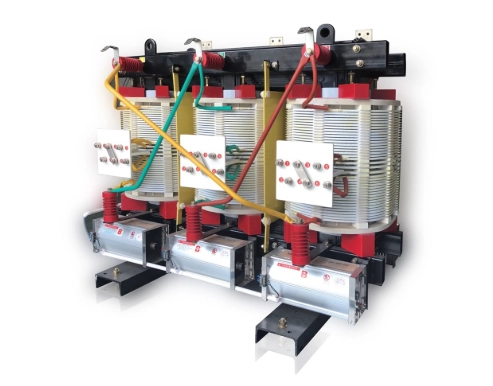
VPI stands for Vacuum Pressure Impregnation. Coils are loaded into a vacuum tank. Air inside is evacuated first, then insulating varnish is forced under pressure to penetrate all inter-layer gaps of the windings, followed by drying and curing. No fully enclosed outer shell is formed; windings remain in an open-structure design and the coil body is visible.
Cast-Resin Transformer: Full epoxy encapsulation prevents moisture, salt spray and dust from penetrating into windings. After shutdown under humid conditions, the unit can be restarted directly without drying. Well-suited for humid workshops, coastal salt-spray environments, underground tunnels and dusty industrial plants.
VPI Dry-Type Transformer: Open-coil construction. Insulating varnish only impregnates gaps between conductors and provides no full enclosure. Performance remains stable in clean, dry surroundings. Under persistent high-humidity or heavy-dust conditions, moisture and dust accumulate within coil gaps and gradually reduce insulation resistance. Space heaters are recommended for humid locations. VPI units are not suitable for harsh environments with heavy salt-spray or heavy dust loading.
Cast-Resin Transformer: Solid resin dampens vibration transmission from core and windings, delivering relatively lower noise for equal kVA ratings. The monolithic cast structure resists coil displacement and deformation during short-circuit events, offering excellent short-circuit withstand mechanical strength and superior seismic performance during transportation.
VPI Transformer: Coils are bonded by insulating varnish with decent mechanical strength. Nevertheless, winding displacement risk exists under extreme short-circuit electromagnetic forces. Noise level is slightly higher compared with cast-resin units of equal rating.
Cast-Resin Transformer: Virtually maintenance-free. The resin barrier blocks dust and moisture. Routine checks are limited to ventilation and temperature monitoring. Drawback: once internal coil damage occurs, partial repair is not feasible; complete coil replacement is required.
VPI Transformer: Moderate maintenance requirement. Periodic cleaning of coil surface dust is necessary. Drying treatment is needed after moisture ingress. Advantage: locally-damaged coils can be repaired on-site via partial re-impregnation with varnish, granting repairability.
QXG cast-resin transformers feature fully-enclosed solid housings, delivering outstanding performance in moisture-proofing, dust-proofing, mechanical robustness and near-zero maintenance, making them ideal for complex harsh operating conditions. However, partial coil repair is impossible upon internal failure.
VPI vacuum-pressure-impregnated transformers adopt open windings allowing partial on-site repair. Yet they impose strict requirements on ambient cleanliness and humidity. Dehumidification and dust-resistant enclosures are mandatory for humid and dusty installation sites.
For engineering selection, cost alone should not be the decisive factor. The insulation technology shall be determined comprehensively according to site environmental conditions and long-term operation-and-maintenance arrangements.