


Dry-type transformers are widely used in commercial buildings, data centers, industrial power distribution systems, rail transit facilities, and other applications where reliable power supply and operational safety are essential. Unlike oil-immersed transformers, dry-type transformers use air or other insulating materials for cooling and insulation, eliminating the need for insulating oil and reducing certain fire and leakage risks.
However, the transformer itself is not the only factor that determines long-term operating reliability. Its surrounding installation environment also plays an important role. A properly designed dry-type transformer enclosure provides an additional layer of protection, helping maintain suitable operating conditions, prevent accidental contact with live components, and reduce the impact of external environmental factors.
More than a simple metal housing, the enclosure is an important protective component of the transformer installation. Its design, protection rating, ventilation structure, and material selection all influence equipment safety and service life. This article explores the main functions of dry-type transformer enclosures and explains why proper enclosure protection matters.
One of the primary functions of a dry-type transformer enclosure is to prevent foreign objects from entering the equipment area. Dust, debris, small animals, and other external contaminants can interfere with normal transformer operation if they reach internal components.
According to IEC 60529, which is equivalent to China’s GB/T 4208 standard, enclosure protection ratings are classified using the IP code. For dry-type transformer enclosures with a protection rating higher than IP30, a shield should be installed at the rear of the enclosure to prevent rodents, small animals, and foreign debris from entering.
Foreign object intrusion can create several operational problems. For example, accumulated dust may affect heat dissipation and insulation performance, while conductive debris can potentially cause short circuits or electrical faults. Small animals entering the enclosure may also damage cables or insulation materials, increasing the risk of unexpected equipment failure.
A properly designed enclosure helps maintain a cleaner and more controlled environment around the transformer. Its protective structure, including appropriately designed openings, covers, and ventilation grilles, limits the entry of unwanted materials while supporting the airflow required for normal operation.
It is also important to consider the balance between protection and ventilation. Dry-type transformers generate heat during operation, and adequate heat dissipation is necessary to prevent excessive temperature increases. Therefore, the enclosure should provide sufficient ventilation without compromising its intended protection level.
Electrical safety is another essential function of a dry-type transformer enclosure. Regardless of whether the transformer is installed indoors or outdoors, its live components must be adequately separated from the surrounding environment.
The enclosure acts as a physical barrier between energized transformer components and personnel working nearby. It helps prevent accidental contact with live parts, reducing the risk of electric shock and protecting operators, maintenance personnel, and other individuals in the installation area.
This protection is particularly important in commercial buildings, industrial facilities, and public infrastructure, where transformers may be installed in areas accessible to maintenance teams or other authorized personnel.
In addition to preventing direct contact, a suitable enclosure helps establish a more organized and controlled installation space. Access doors and protective panels can be designed to facilitate authorized inspection and maintenance while restricting unauthorized access to potentially hazardous electrical components.
Proper grounding and bonding of conductive enclosure parts are also important considerations. When correctly designed and installed, these measures help ensure that the enclosure forms part of the overall electrical safety system.
Therefore, selecting an enclosure involves more than considering its external dimensions or appearance. Its protective structure, access arrangements, and electrical safety provisions must all be compatible with the transformer and the requirements of the installation site.
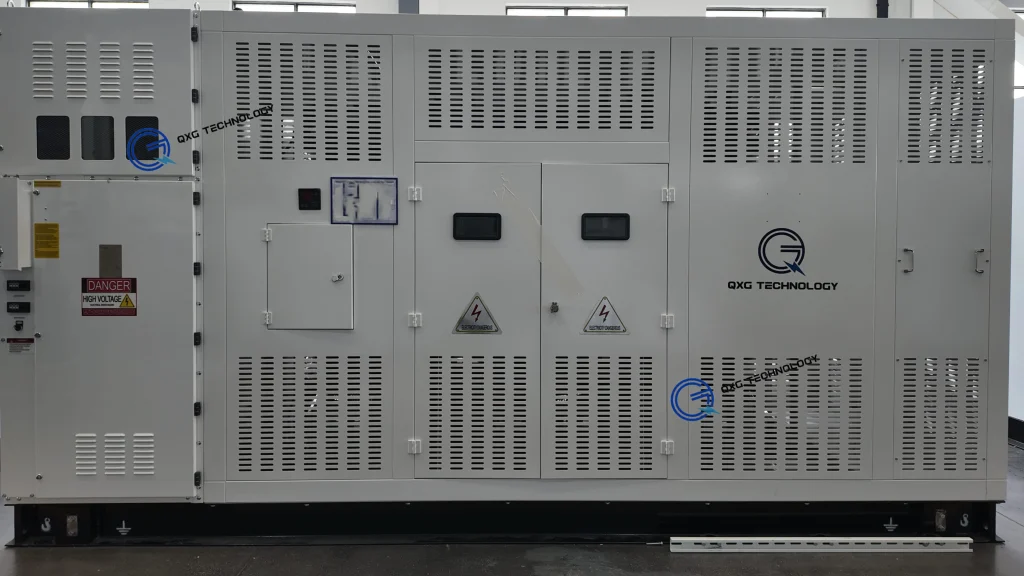
Dry-type transformers are often installed in environments where they may be exposed to dust, moisture, temperature fluctuations, sunlight, and other environmental factors. Without suitable external protection, prolonged exposure can accelerate the deterioration of certain transformer components and supporting electrical connections.
A properly selected enclosure provides a protective barrier against these environmental influences. Depending on its design and protection rating, it can reduce the entry of rainwater, airborne dust, and other contaminants while limiting direct exposure to sunlight and ultraviolet radiation.
Material selection is particularly important for installations in demanding environments. Metal enclosures with appropriate surface treatments or protective coatings can offer resistance to corrosion, helping maintain structural integrity during long-term operation. For outdoor installations, the enclosure material and coating should be selected according to local climate conditions and potential exposure to moisture or corrosive substances.
The enclosure also helps reduce the accumulation of environmental contaminants around important transformer components, including windings, cores, and electrical connections. By limiting direct exposure, it can help reduce maintenance requirements and slow certain forms of equipment deterioration.
However, environmental protection must be considered together with thermal management. An enclosure that is excessively sealed or poorly ventilated may restrict airflow and cause the transformer to operate at a higher temperature than intended. Proper ventilation design, suitable IP protection, and appropriate material selection should therefore be considered together.
With the right configuration, a dry-type transformer enclosure helps protect equipment against environmental wear and supports more reliable long-term operation.
Beyond its basic protective functions, a dry-type transformer enclosure also contributes to a more organized installation. It provides a defined space for housing the transformer and helps separate the equipment from surrounding electrical installations, cables, and other facility components.
A well-designed enclosure can make the overall transformer installation more orderly and easier to manage. Its structural layout can accommodate the required access points, ventilation openings, and cable entry arrangements, depending on the specific transformer design.
This is particularly useful in commercial buildings, industrial plants, and data centers, where equipment space may be limited and electrical installations need to be arranged systematically.
The enclosure can also provide additional mechanical protection against accidental impacts and contact with nearby objects. This helps reduce the possibility of external damage during routine facility operations.
Although the enclosure does not replace proper transformer installation or maintenance procedures, it provides an additional protective structure that supports safer equipment management throughout the operating lifecycle.
A dry-type transformer enclosure is far more than a simple metal cover. It is an important component that contributes to equipment protection, electrical safety, environmental resistance, and installation organization.
From preventing foreign object intrusion and isolating live components to reducing environmental exposure and supporting long-term equipment reliability, the enclosure performs several functions that directly affect the operating conditions of dry-type transformers.
When selecting an enclosure, factors such as IP protection rating, ventilation design, enclosure material, corrosion resistance, and compatibility with the transformer should all be carefully evaluated. QXG provides dry-type transformer enclosure solutions designed to meet different installation and protection requirements, helping customers achieve safer and more reliable power distribution systems.
1. What is the main purpose of a dry-type transformer enclosure?
The main purpose of a dry-type transformer enclosure is to protect the transformer from external interference and provide a physical barrier between live components and surrounding personnel. It also helps reduce exposure to dust, moisture, foreign objects, and other environmental factors, supporting safe and stable equipment operation.
2. Does a dry-type transformer enclosure affect heat dissipation?
Yes. The enclosure can influence the airflow and heat dissipation of a dry-type transformer. Since transformers generate heat during operation, the enclosure must have an appropriate ventilation structure to maintain sufficient airflow. Poor ventilation may cause excessive temperature increases and affect transformer performance and service life.
3. How do you choose the right enclosure protection rating for a dry-type transformer?
The appropriate IP protection rating depends on the installation environment and the level of protection required. Indoor installations may require protection against dust and accidental contact, while outdoor installations generally need additional protection against rainwater and environmental exposure. The enclosure rating should be selected according to site conditions, applicable electrical standards, and the transformer’s ventilation and cooling requirements.