


In power distribution systems, transformers act as the critical transmission hub that guarantees stable power supply for industrial, commercial and residential scenarios. Many users focus on transformer capacity, voltage class and performance parameters when purchasing equipment, yet overlook a core indicator that directly decides the transformer’s service life and operational safety — temperature rise.
Today, we will interpret the professional engineering logic of transformer temperature rise and its safety control standards in plain language, helping you fully understand how temperature management protects your transformers for long-term stable operation.
The rated temperature rise marked on each transformer nameplate represents the temperature gap between the internal hot spot temperature of the running transformer and the standard ambient temperature (the unified standard ambient temperature for power transformers is 40°C).
Heat distribution inside oil-immersed transformers is uneven during operation: windings, iron core and insulating oil all generate heat at different rates. If there is no clear upper limit for temperature rise under rated load, excessive heat will rapidly age internal insulating materials, trigger insulation failure and even lead to equipment breakdown. Hence, international standards set strict temperature rise limits for all key components of transformers.
Most pad-mounted transformers and conventional distribution transformers adopt Class A insulating materials, with unified temperature thresholds formulated by ANSI and IEEE standards:
These multi-layer temperature rise limits form a complete thermal protection barrier for transformers. Whether in high-temperature outdoor environments or continuous full-load operation, as long as all temperature rise indicators stay within the specified range, the transformer can maintain safe and stable operation throughout its full design lifespan.
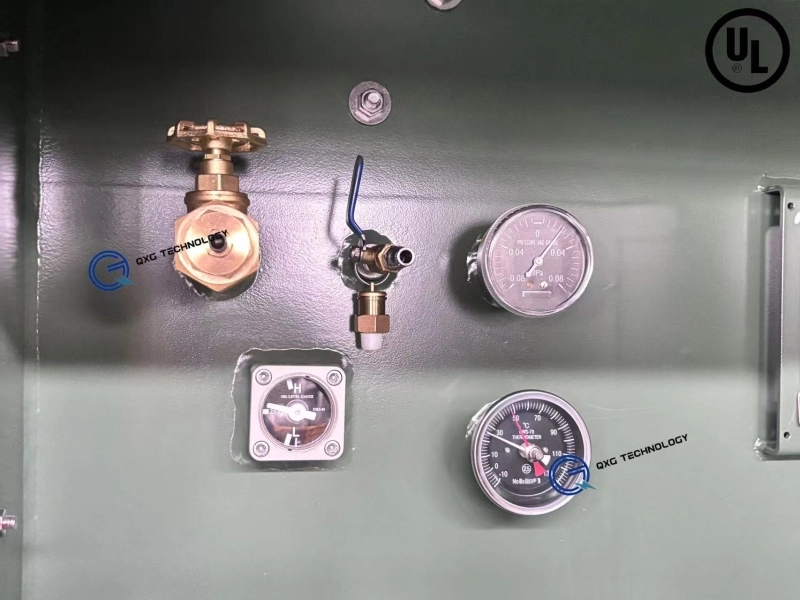
Insulating paper, mineral oil and other internal insulation materials are the “lifeline” of transformers. Every 8–10°C rise beyond the rated temperature limit will double the aging speed of insulation. Long-term over-temperature operation will cause irreversible damage:
Precise temperature rise control fundamentally delays insulation aging, cuts equipment failure rates and reduces later maintenance costs.
Temperature rise is not merely a technical parameter printed on the nameplate — it is the core benchmark that measures your transformer’s operating health. Strictly controlling temperature rise within standard limits is the most effective way to maximize transformer service life and secure uninterrupted power supply.
With extensive experience in transformer manufacturing, QXG provides reliable transformer solutions with optimized thermal designs, temperature monitoring systems and customized configurations to support stable operation in various power distribution applications.
If you have inquiries about pad-mounted transformers, temperature monitoring accessories (temperature gauges, pressure relief devices with contacts) or customized thermal design solutions, welcome to contact our professional engineering team for one-stop technical support.