


The configuration of transformer windings plays a crucial role in the transmission, transformation, distribution, and management of voltage in power systems. Different winding connection methods determine not only voltage levels and phase relationships, but also grounding behavior, fault performance, harmonic control, and load adaptability. Among various three-phase transformer configurations, the Delta (Δ) connection and the Star (Y) connection are the two most commonly used in industrial, commercial, and utility applications due to their distinct electrical characteristics and practical advantages.
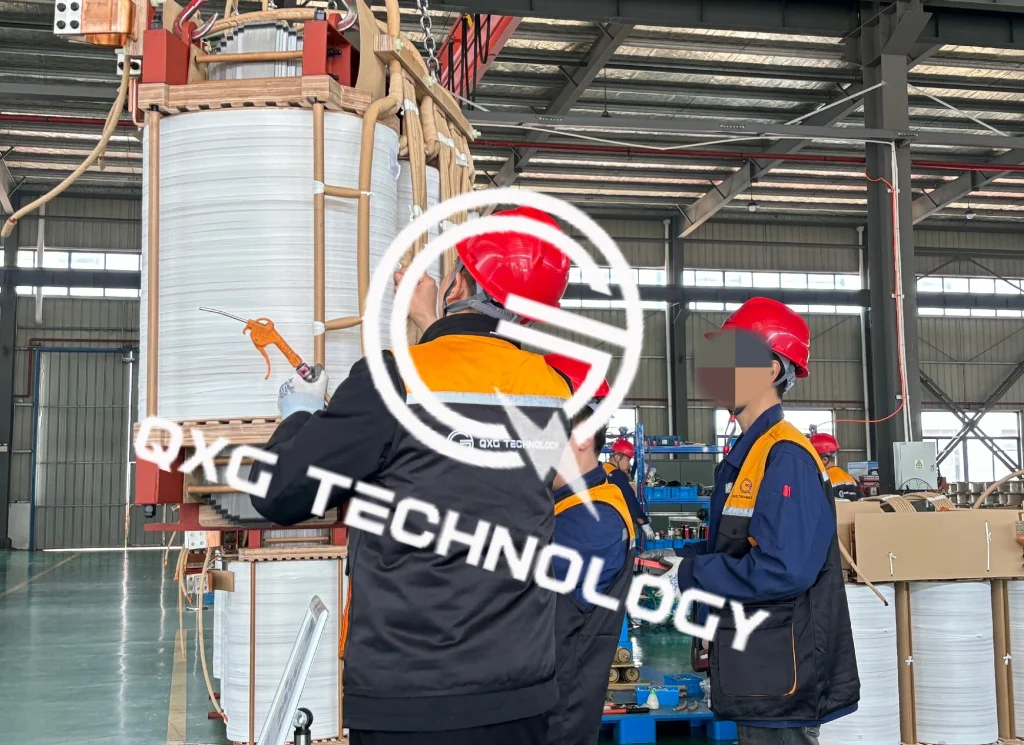
In a Star connection, the ends (or starts) of the three-phase windings are connected together to form a neutral point, resembling the letter “Y.” This neutral point enables the system to provide both line voltage and phase voltage, which makes the Star configuration highly flexible for mixed-load environments within the same power network. It supports the simultaneous supply of three-phase power for industrial equipment and single-phase power for lighting, control systems, and small electrical devices.
Due to the presence of a neutral point, the Star connection facilitates reliable system grounding, improves protection coordination, and provides a stable reference potential for protective relays and monitoring devices. This helps the system detect ground faults more accurately and limits overvoltage risks during abnormal conditions. For these reasons, Star-connected transformers are widely used in distribution networks that require a neutral line, especially in urban and suburban power grids, residential power supply systems, and low-voltage industrial facilities where safety, stability, and load diversity are critical.
In a Delta connection, the three-phase windings are connected end-to-end in a closed triangular loop, with only three phase lines brought out and no neutral point. Because there is no neutral conductor, this configuration is typically applied in ungrounded or high-impedance grounded systems where direct neutral grounding is not required or preferred.
A major advantage of the Delta connection is that it provides an internal circulating path for third-harmonic currents. These harmonics can circulate within the transformer windings instead of being injected into the external grid, which helps improve power quality and reduces distortion on the supply side. As a result, Delta-connected transformers are particularly suitable for applications with high harmonic loads, such as large industrial plants, variable frequency drive (VFD) systems, welding equipment, rectifiers, and heavy motor installations.
In addition, the Delta configuration offers better tolerance to unbalanced loads and enhanced voltage stability under certain operating conditions, which is why it is frequently used in transmission networks, power generation facilities, and high-power industrial environments where reliability and performance are critical.
| Connection Combination | Structural Features | Main Applications | Key Advantages |
| Δ-Y (Delta-Star) |
Primary side Δ, secondary side Y, neutral grounded | Commercial, industrial, and residential distribution systems, mixed-load environments | Primary Δ suppresses harmonics; secondary Y provides a neutral point, enabling simultaneous output of line voltage (three-phase) and phase voltage (single-phase), offering strong adaptability
|
| Δ-Δ (Delta-Delta) |
Both primary and secondary sides are Δ, no neutral point | Heavy industry, manufacturing plants, large motor drives, rectifier systems | Harmonics circulate within the windings, preventing grid injection; stable voltage with no neutral point shift; suitable for balanced three-phase loads
|
| Y-Y (Star-Star) |
Both primary and secondary sides are Y, each with a neutral point | Specific voltage-level interconnection transformers, scenarios requiring electrical isolation with balanced loads | Windings withstand phase voltage, lower insulation requirements, cost-effective manufacturing; both sides can be grounded, adaptable to various grounding systems
|
| Y-Δ (Star-Delta) |
Primary side Y, secondary side Δ | Power plant step-up stations, high-voltage transmission networks | High-voltage side Y connection reduces insulation costs, suitable for high-voltage environments; Δ side provides a harmonic path, improving power quality
|
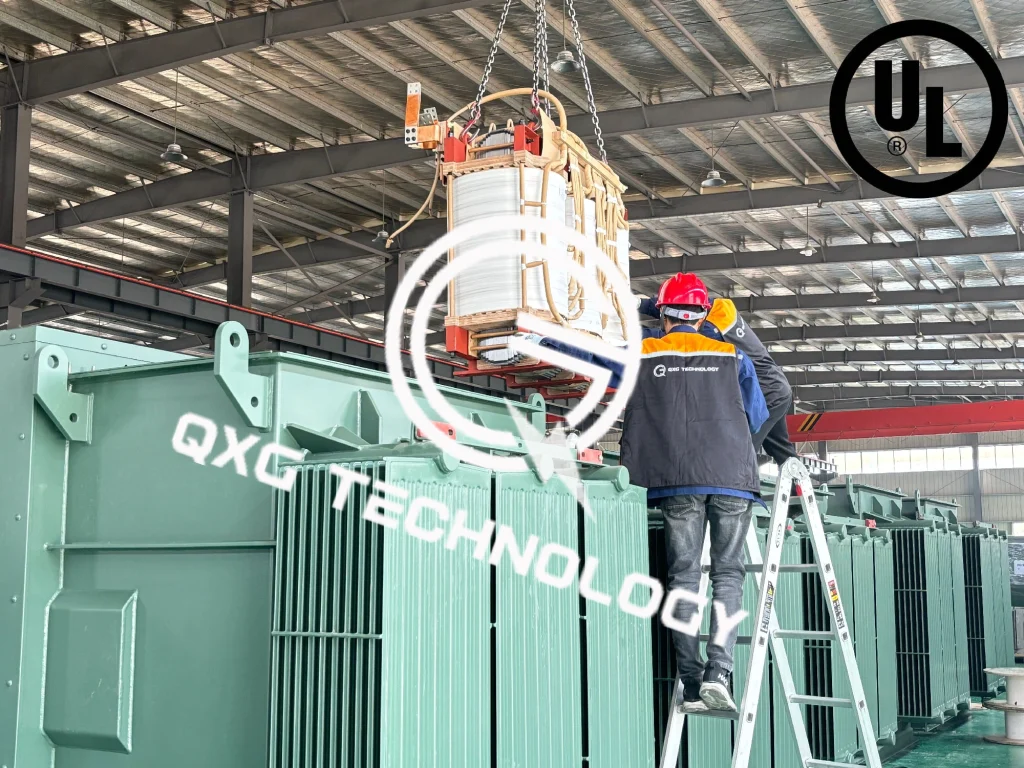
The selection of transformer connection methods is essentially a comprehensive balance among technical performance, economic efficiency, and system compatibility. In practical applications, it is important to carefully consider factors such as load characteristics, grid conditions, harmonic control, grounding requirements, and lifecycle costs to determine the most appropriate connection scheme. A well-chosen connection method not only improves transformer efficiency and operational stability but also supports the safe, reliable, and cost-effective performance of the entire power system.
Choose QXG Transformers for professional engineering design and dependable quality, helping you achieve the optimal balance between technical excellence and economic value.