


Three-phase transformers are at the heart of modern power distribution networks, supplying factories, commercial buildings, and residential areas with stable and efficient electrical energy. To optimize cost, reduce material usage, and save space, most three-phase transformers integrate three independent transformer units onto a shared magnetic core instead of using three separate single-phase transformers.
The true complexity and versatility of three-phase transformers come from the connection configurations of their primary and secondary windings. These connection methods directly influence voltage characteristics, load compatibility, neutral availability, and system applications.
The four fundamental connection combinations—Delta-Delta, Star-Star, Star-Delta, and Delta-Star—are essential for power engineers when selecting or interpreting a transformer’s performance. This connection information is always indicated on the transformer’s nameplate and is a key reference for installation and system integration.
This article provides a professional and in-depth explanation of the major connection types, their advantages, identification methods, and special industrial variants.
The Star (or Wye, symbol Y) connection is one of the most commonly used winding configurations. In this setup, one end of each coil is connected to a single neutral point, forming a shape that resembles the letter “Y.” The remaining ends of the three coils are connected to the three-phase power supply.
A neutral wire can be derived from the common connection point
Supports both single-phase and three-phase loads
Provides flexible voltage combinations (phase voltage vs. line voltage)
Offers better safety and load balancing for residential and commercial systems
Because the presence of a neutral wire allows both 120/208V or 230/400V systems (depending on the region), many distribution networks and building electrical systems adopt the Star configuration.
Residential neighborhoods
Commercial buildings
Office towers
Hospitals and schools
Mixed-load systems with both lighting and motors
If the winding terminals show:
One side of all windings tied to a common neutral terminal, and
The opposite ends connected to phase terminals,
then the configuration is a Star (Y) connection.

In a Delta (symbol Δ) connection, the three coils are connected end-to-end, forming a closed loop. The three-phase power lines connect at the junctions of each coil pair.
No neutral point is available
Ideal for pure three-phase loads such as motors
Better tolerance to unbalanced loads
Provides inherent phase shifting capabilities in certain applications
Can continue operation even if one coil fails (in Delta-Delta setups)
The Delta configuration is compact and highly efficient for delivering mechanical power in industrial environments.
Large industrial machinery
Heavy-duty motors
Industrial plants
Mining and manufacturing sectors
Environments without single-phase load requirements
If the winding terminals show:
Each coil connected directly to another coil
No shared common point or neutral
All ends forming a continuous triangle-like loop
then the transformer uses a Delta (Δ) configuration.
Three-phase transformers typically combine the Star or Delta connection on both primary and secondary windings. The four basic configurations are:
No neutral available
Excellent for handling heavy motor loads
High mechanical strength
Continues operating even if one winding fails (open delta mode)
Neutral available on both sides
Ideal for systems with balanced loads
Often used in long-distance distribution
May require phase-shifting adjustments to avoid harmonics
Common in step-down distribution transformers
High-voltage side uses Star to stabilize line-to-ground insulation
Low-voltage side uses Delta for motor loads
Provides phase shift beneficial in certain grid applications
Widely used for step-up transformers in transmission systems
Neutral available on low-voltage side
Supports mixed loads
Reduces harmonic distortion
These combinations allow engineers to design power systems that balance safety, voltage requirements, load characteristics, and efficiency.
Modern three-phase transformers commonly use a concentric winding structure, where one coil is nested inside the other. This arrangement provides:
Better magnetic coupling
Reduced leakage reactance
Higher space efficiency
Improved mechanical stability
The choice of coil arrangement greatly influences transformer reliability and heat dissipation, especially in high-load or continuous-use applications.
Beyond standard Star and Delta connections, the power industry employs special variants tailored for unique system requirements.
A variation of the Delta connection
A tap is taken from the midpoint of one coil
Provides both two-phase and three-phase voltage combinations
Common in older commercial buildings or rural networks in North America
Uses only two transformer units to produce three-phase power
Economical solution for light or temporary loads
Useful for emergency replacements or rural distribution
Lower capacity than a full Delta-Delta transformer but highly flexible
These variants demonstrate the adaptability of transformer design to a wide range of electrical infrastructure challenges.
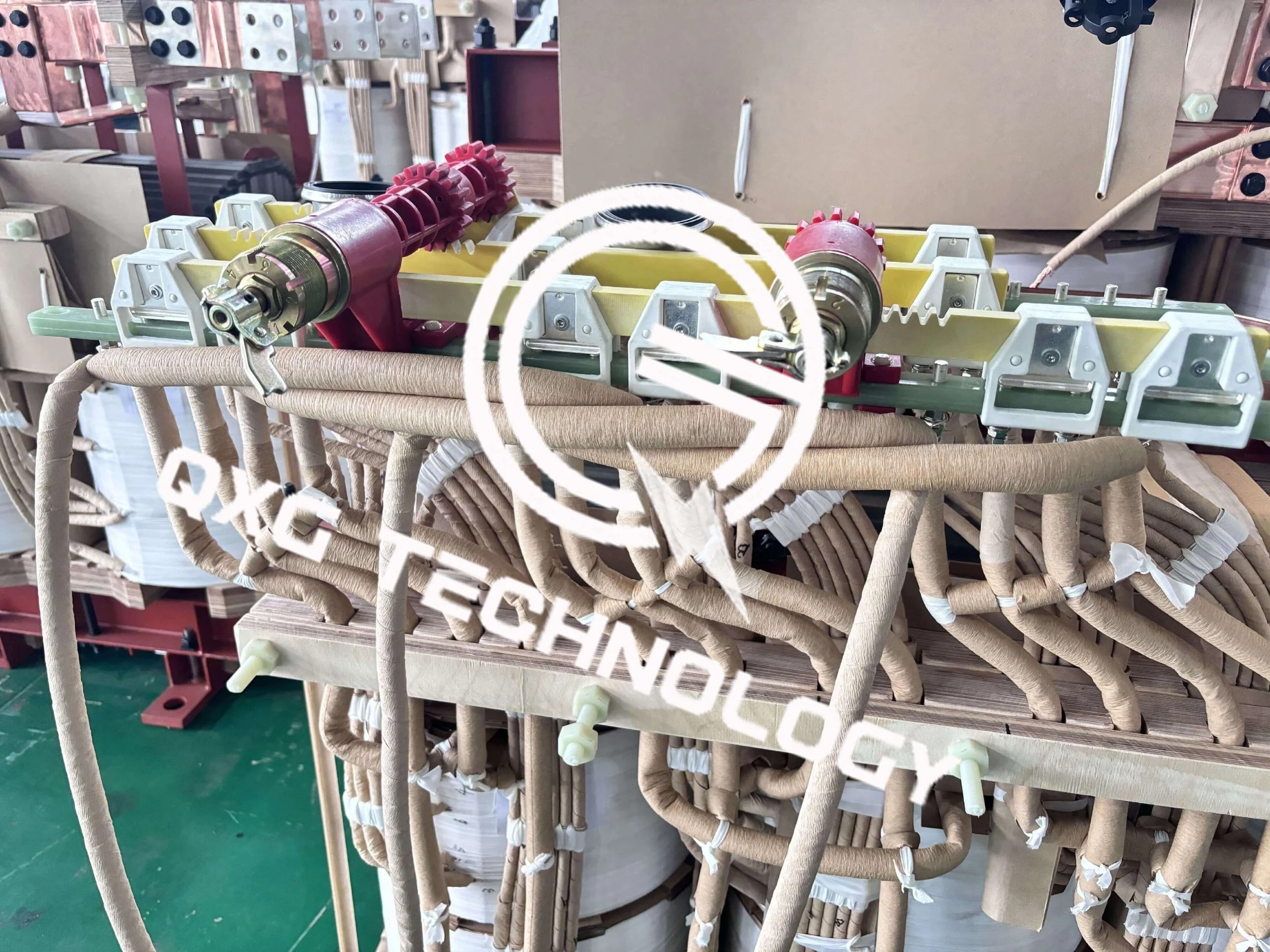
Choosing the appropriate winding configuration affects:
System voltage levels
Load compatibility
Safety and grounding
Harmonic behavior
Fault tolerance
Overall system efficiency
Understanding these configurations ensures proper transformer selection, optimized installation, and long-term operational stability.
Whether supplying a commercial building, powering industrial motors, or connecting to national grid infrastructure, the correct transformer configuration plays a crucial role in achieving safe and reliable power distribution.
Three-phase transformer connection methods—Star, Delta, and their combinations—allow electrical engineers to tailor power systems to diverse applications. From providing neutral wires for mixed residential loads to supplying high-power industrial equipment, these configurations ensure efficient energy delivery across all sectors.
By integrating robust coil designs, optimized materials, and specialized variants, modern transformers deliver high performance while meeting evolving power distribution demands.
If you need guidance on choosing the right transformer configuration or want support with selection, installation, or system evaluation, feel free to contact us. We are committed to providing professional, reliable answers and comprehensive transformer solutions tailored to your needs.