


In modern petrochemical plants, reliable and efficient power distribution systems are essential to ensure continuous production and operational safety. Among the key components of these systems are transformers, which are responsible for stepping up or stepping down voltage levels to meet the electrical demands of various equipment and processes. Two main types of transformers—oil-immersed transformers and dry-type transformers—are widely used in industrial settings. While both serve the same fundamental purpose, their construction, performance, and safety characteristics determine their suitability for different application scenarios within petrochemical facilities.
Transformers are critical for voltage conversion and electrical isolation in industrial environments. Their design and insulation methods directly impact efficiency, thermal stability, and operational safety.
Oil-immersed transformers rely on insulating oil to provide both electrical insulation and heat dissipation.
Dry-type transformers, on the other hand, use solid insulation systems—typically epoxy resin or cast resin—to insulate windings without any liquid medium.
In petrochemical plants, where flammable gases and vapors may exist, these differences become particularly important in determining where and how each type can be safely applied.
Oil-immersed transformers are the traditional choice for large-capacity power supply systems. Their insulating oil not only enhances dielectric strength but also efficiently transfers heat from the windings to the transformer tank walls, allowing effective cooling through natural or forced convection. This makes them ideal for handling heavy electrical loads over long operational periods.
Advantages:
Excellent heat dissipation due to the oil’s high thermal conductivity.
Low operational losses and good overall efficiency.
Suitable for high-capacity and main substation applications where reliability and performance are prioritized.
However, oil-immersed transformers also introduce significant safety concerns. The insulating oil is flammable, and under fault conditions, it may lead to fire or explosion hazards. Additionally, oil leakage can cause environmental contamination and increase maintenance costs. Therefore, strict safety measures—such as fire barriers, oil collection pits, and fire suppression systems—are required for their installation.
In petrochemical plants, oil-immersed transformers are typically placed in non-hazardous zones, such as outdoor substations or utility areas far from production units, where the risk of ignition is minimal.

Dry-type transformers differ fundamentally in design and materials. They eliminate the use of flammable insulating oil and rely instead on solid insulation, most commonly epoxy resin. This construction makes them fire-resistant, environmentally friendly, and suitable for installation in areas where safety is critical.
Key Features:
No oil—thus no risk of leakage or fire caused by insulating fluid.
Compact structure and small installation footprint, ideal for confined indoor spaces.
Can be designed with explosion-proof enclosures, preventing internal arcs or sparks from escaping.
Capable of withstanding high temperatures with H-class insulation (up to 180°C).
Available with anti-corrosion coatings, allowing stable operation in humid or corrosive petrochemical environments.
Due to these advantages, dry-type transformers are widely used in explosion-proof areas, raw material storage zones, and auxiliary facilities requiring moderate power capacity. Their flexible layout and low maintenance requirements also make them cost-effective for distributed power networks within large plants.
The choice between oil-immersed and dry-type transformers depends on a combination of technical, environmental, and safety factors.
| Parameter | Oil-Immersed Transformer | Dry-Type Transformer |
|---|---|---|
| Cooling Medium | Insulating oil | Solid insulation (epoxy resin) |
| Heat Dissipation Efficiency | Excellent | Moderate |
| Fire Risk | High (flammable oil) | Very low |
| Maintenance | Requires oil checks and leakage control | Low maintenance |
| Installation Area | Outdoor or non-hazardous indoor | Indoor or hazardous area |
| Capacity Range | Suitable for large capacities | Ideal for small to medium capacities |
| Environmental Resistance | Sensitive to oil leaks and humidity | Resistant to moisture and corrosion with coating |
| Explosion Protection | Requires additional measures | Intrinsically safer, can be explosion-proof type |
In summary, oil-immersed transformers are the best choice for main power substations that handle large loads, provided that sufficient fire protection and containment systems are in place. Conversely, dry-type transformers are better suited for localized or secondary power distribution, especially in zones with flammable or explosive materials, where safety and compactness are prioritized.
In petrochemical plants, electrical design engineers often adopt a hybrid approach—deploying both types of transformers in different sections of the facility:
Main substations: Use oil-immersed transformers for high-capacity voltage transformation.
Control rooms, process units, and raw material warehouses: Use dry-type transformers for safety and environmental protection.
Remote auxiliary workshops: Depending on capacity and space, either type may be selected with appropriate safety measures.
This mixed configuration ensures optimal performance while maintaining compliance with industrial safety standards such as IEC, IEEE, and national explosion-proof regulations.
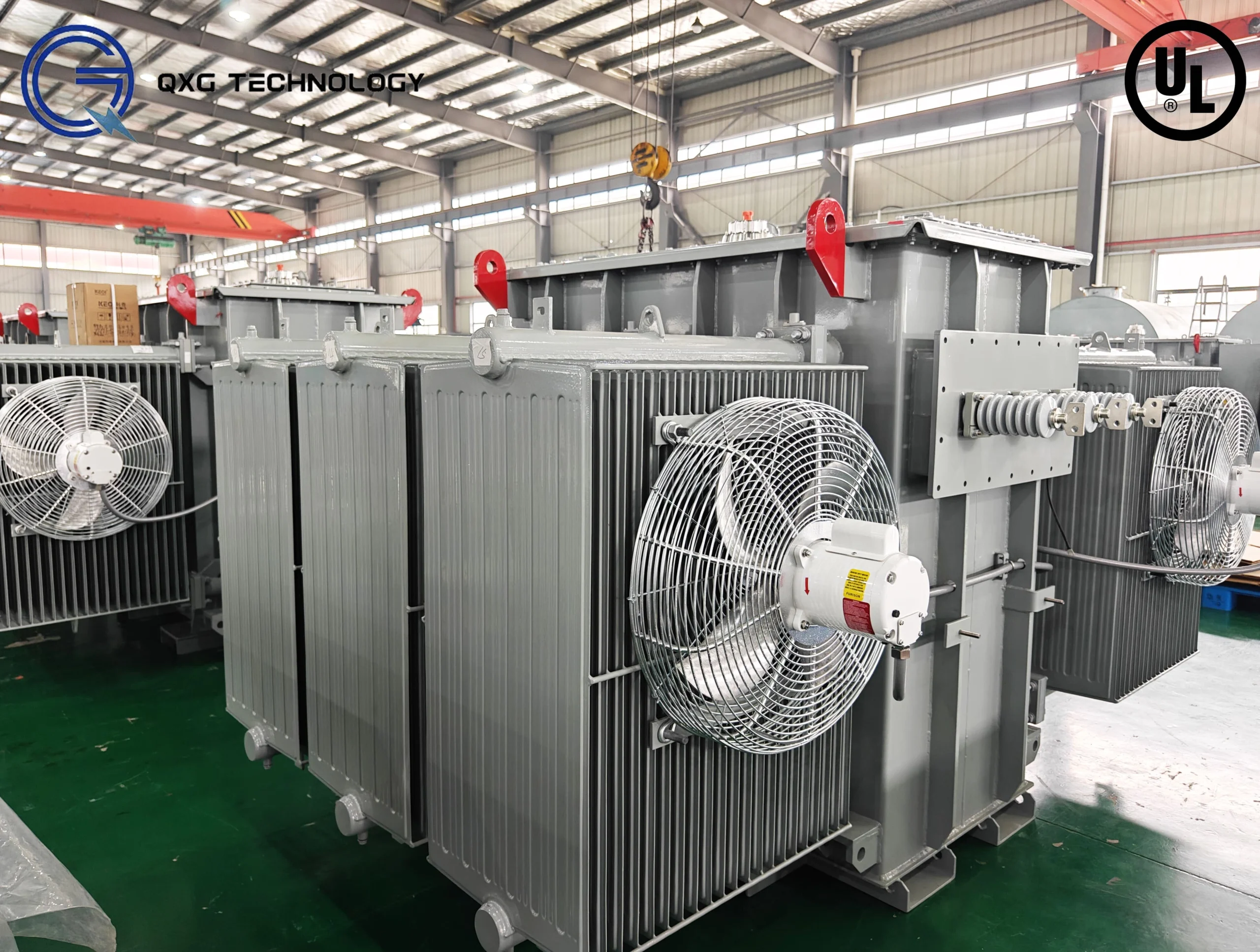
Both oil-immersed and dry-type transformers play vital roles in the energy systems of petrochemical plants. Their differences in insulation medium, cooling performance, and fire safety determine their suitability for specific environments. Oil-immersed transformers excel in efficiency and load handling but require rigorous safety precautions, while dry-type transformers offer superior safety and environmental adaptability for smaller-scale applications.
For petrochemical enterprises aiming to balance performance, reliability, and safety, selecting the right transformer type—and configuring it correctly within the overall electrical system—is a critical engineering decision.