


A transformer is an essential electrical device used to transfer electrical energy between circuits while changing voltage levels. It plays a critical role in power generation, transmission, distribution, and industrial electrical systems.
From power plants and substations to residential communities and commercial buildings, transformers help deliver electricity safely and efficiently by increasing or decreasing voltage according to different application requirements.
For example, electricity generated at power plants is usually transmitted over long distances at high voltage to reduce energy losses. Before reaching end users, transformers step down the voltage to a safer level suitable for homes, businesses, and industrial equipment.
What Is a Transformer?
A transformer is a static electrical device that uses electromagnetic induction to transfer electrical energy from one circuit to another without changing the frequency.
The main functions of a transformer are:
- Voltage conversion: Increase or decrease voltage levels.
- Electrical isolation: Separate two circuits for improved safety.
- Power distribution: Deliver electricity efficiently across different systems.
Unlike motors or generators, transformers do not have moving parts. Their simple structure and reliable operation allow them to provide long service life with minimal maintenance.

How Does a Transformer Work?
A transformer works based on Faraday’s Law of Electromagnetic Induction.
The working process includes three basic steps:
1. AC Power Enters the Primary Winding
When alternating current (AC) flows through the primary winding, it creates a changing magnetic field around the coil.
2. Magnetic Flux Transfers Energy Through the Core
The transformer core provides a low-resistance path for magnetic flux. The changing magnetic field travels through the core and reaches the secondary winding.
3. Voltage Is Induced in the Secondary Winding
The changing magnetic flux generates an induced voltage in the secondary winding, transferring electrical energy to the output circuit.
The voltage ratio depends on the number of turns in the primary and secondary windings:
Voltage Ratio = Primary Turns ÷ Secondary Turns
- More turns on the secondary winding → Higher output voltage (step-up transformer)
- Fewer turns on the secondary winding → Lower output voltage (step-down transformer)
Main Components of a Transformer
A transformer consists of several key components that work together to ensure reliable power conversion.
| Component | Function |
|---|---|
| Core | Provides a path for magnetic flux and improves energy transfer efficiency |
| Primary Winding | Receives input electrical energy |
| Secondary Winding | Delivers converted electrical energy |
| Insulation System | Prevents electrical leakage and improves safety |
| Transformer Tank | Protects internal components and contains insulating oil in oil-filled transformers |
| Cooling System | Controls operating temperature and improves service life |
The quality of each component directly affects transformer efficiency, reliability, and operating lifespan.
Different Types of Transformers
Transformers can be classified according to their design, insulation method, voltage level, and application.
1. Distribution Transformer
Distribution transformers are mainly used in electrical distribution networks to reduce medium voltage electricity to a level suitable for end users.
Common applications include:
- Residential communities
- Commercial buildings
- Industrial facilities
- Utility power networks
Examples include pad mounted transformers and pole mounted transformers.

2. Pad Mounted Transformer
A pad mounted transformer is an outdoor distribution transformer installed on a concrete pad. It is commonly used in underground electrical distribution systems.
Key advantages include:
- Safe outdoor installation
- Compact design
- Protection against environmental conditions
- Suitable for residential and commercial power distribution
QXG provides single phase and three phase pad mounted transformers designed according to international standards such as IEEE, CSA, DOE, and ANSI.

3. Pole Mounted Transformer
Pole mounted transformers are installed on utility poles and are widely used in overhead distribution systems.
They are commonly found in:
- Rural power networks
- Utility distribution lines
- Small commercial applications
Their compact structure makes them ideal where ground space is limited.

4. Substation Transformer
Substation transformers are designed for higher power applications and are used in electrical substations.
Typical applications include:
- Power transmission systems
- Utility substations
- Large industrial projects
- Renewable energy facilities
They provide reliable voltage conversion between transmission and distribution networks.

5. Dry Type Transformer
Dry type transformers use air or other solid insulation materials instead of liquid insulation.
Advantages include:
- Fire-resistant design
- Low maintenance requirements
- Environmentally friendly operation
They are commonly installed in:
- Buildings
- Hospitals
- Data centers
- Indoor industrial facilities

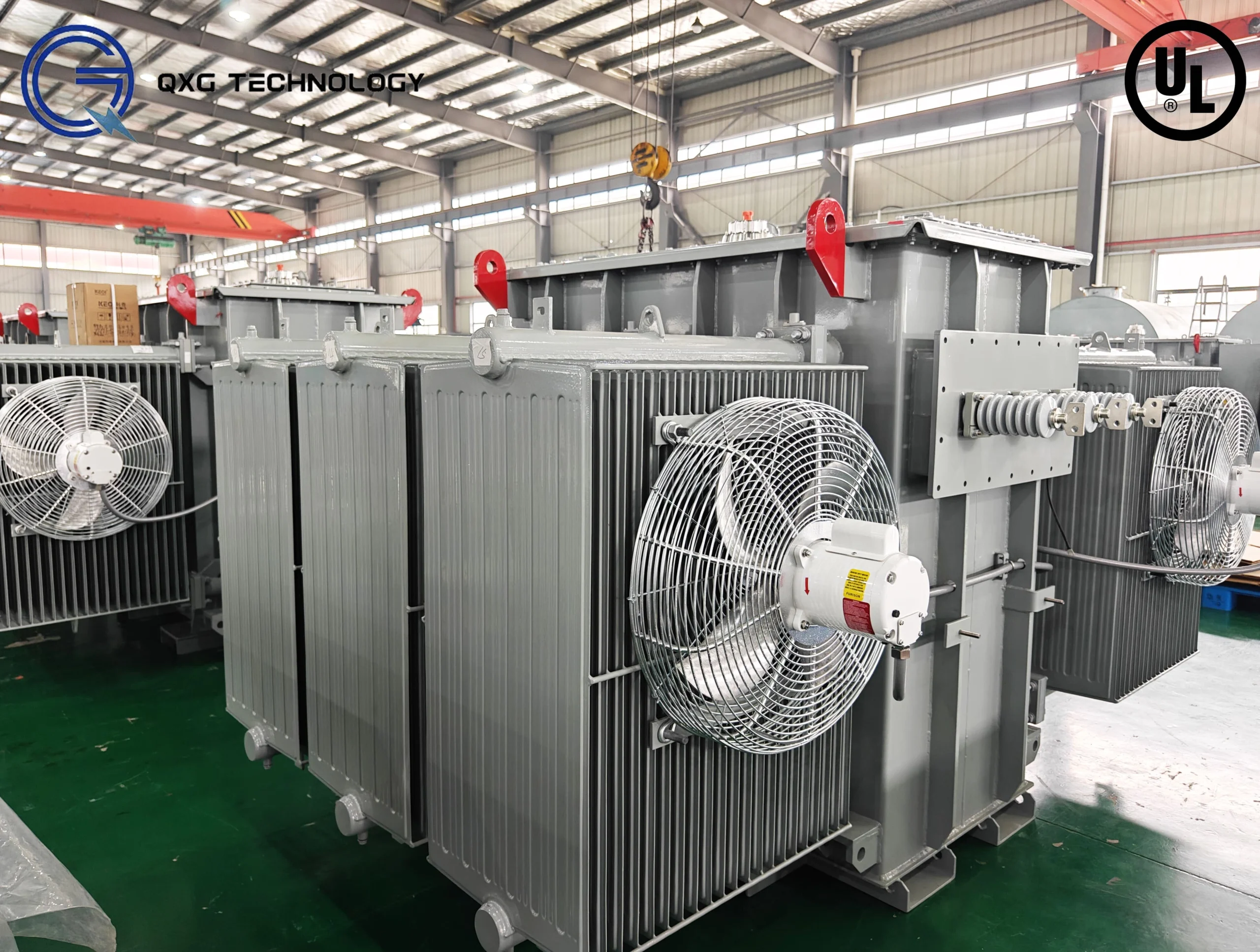
6. Oil Immersed Transformer
Oil immersed transformers use insulating oil for electrical insulation and cooling.
Benefits include:
- Excellent cooling performance
- High reliability
- Suitable for high-power applications
They are widely used in outdoor substations and utility networks.
Why Are Transformers Important in Power Systems?
Transformers are essential because electricity cannot always be transmitted and used at the same voltage level.
Their importance includes:
1. Reducing Power Transmission Loss
High voltage transmission reduces current flow, which helps minimize energy losses over long distances.
2. Improving Electrical Safety
Transformers reduce high transmission voltages to safer levels for homes, businesses, and equipment.
3. Supporting Different Applications
Different industries require different voltage levels. Transformers provide customized voltage solutions for:
- Residential power supply
- Industrial machinery
- Commercial buildings
- Data centers
- Mining operations
- Renewable energy projects
Common Applications of Transformers
Transformers are used across many industries, including:
| Industry | Transformer Applications |
|---|---|
| Residential | Power distribution for homes and communities |
| Commercial | Shopping centers, offices, hotels, and buildings |
| Industrial | Manufacturing plants and heavy equipment |
| Utilities | Power transmission and distribution networks |
| Data Centers | Stable and reliable high-power supply |
| Renewable Energy | Solar and wind power systems |
How to Choose the Right Transformer?
Selecting the correct transformer requires considering several factors:
1. Power Capacity
Determine the required load capacity, usually measured in kVA or MVA.
2. Voltage Requirements
Check:
- Input voltage
- Output voltage
- Frequency requirements
3. Installation Environment
Consider whether the transformer will be installed:
- Indoors or outdoors
- In humid or harsh environments
- In residential or industrial areas
4. Applicable Standards
Different markets require different standards.
For example:
- North America: IEEE, ANSI, CSA, DOE
- Europe: IEC standards
A reliable transformer manufacturer should provide products that meet local electrical requirements. QXG specializes in transformer solutions for markets including the United States and Canada, with products designed according to relevant international standards.
Choose QXG TECHNOLOGY for Reliable Transformer Solutions
Choosing the right transformer supplier is essential for ensuring stable power system performance.
QXG TECHNOLOGY focuses on manufacturing reliable transformer solutions, including:
- Pad Mounted Transformers
- Pole Mounted Transformers
- Substation Transformers
- Power Transformers
- Dry Type Transformers
- Oil Immersed Transformers
With professional manufacturing capabilities, strict quality control, and experience serving international markets, QXG provides customized transformer solutions for residential, commercial, industrial, utility, and energy projects.
For transformer solutions and technical support, please contact QXG TECHNOLOGY at info@qxgelec.com.