


Power transformers are essential components in industrial electrical systems, ensuring that electricity is safely transmitted, distributed, and converted to the voltage levels required by heavy machinery, production lines, and large facilities. From manufacturing plants and data centers to mining operations and energy projects, industrial power transformers help maintain reliable power supply and improve operational efficiency.
Understanding the common types of power transformers used in industrial settings can help businesses select the right equipment based on voltage requirements, load capacity, environmental conditions, and industry standards.
What Is an Industrial Power Transformer?
An industrial power transformer is an electrical device that transfers electrical energy between circuits through electromagnetic induction. Its primary function is to increase or decrease voltage levels while maintaining power efficiency.
In industrial applications, transformers are commonly used to:
- Step down high transmission voltages for industrial equipment
- Step up voltage for power generation and distribution systems
- Provide stable power for sensitive machinery
- Improve electrical safety and system reliability
- Support continuous operation in demanding environments
Industrial transformers are designed to handle high loads, long operating hours, and challenging conditions such as heat, dust, moisture, and vibration.
Common Types of Power Transformers Used in Industrial Applications
1. Oil-Immersed Power Transformers
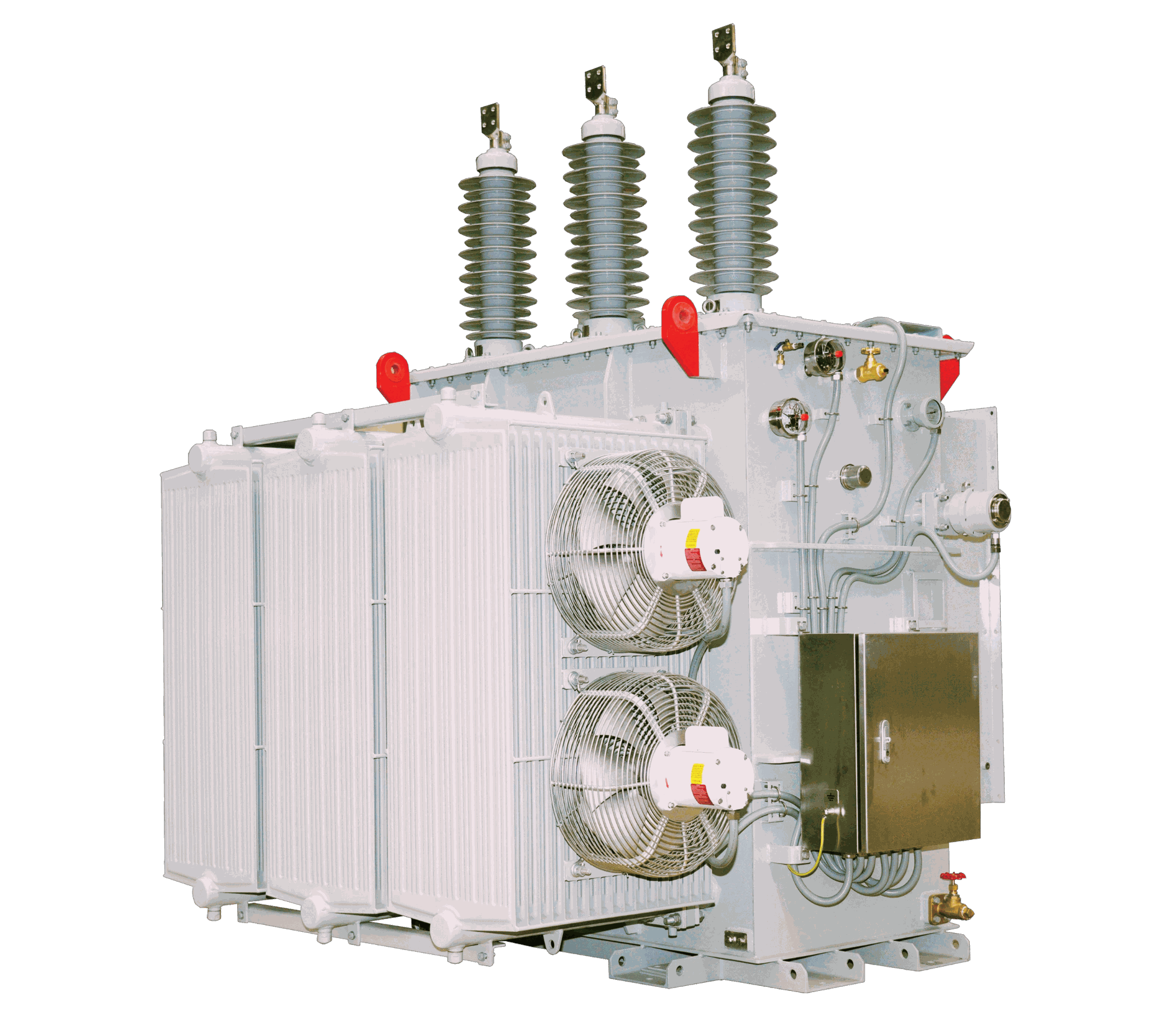
Oil-immersed transformers are among the most widely used power transformers in industrial facilities. These transformers use insulating oil for cooling and electrical insulation.
Key Features:
- Excellent heat dissipation capability
- Suitable for high-voltage and high-capacity applications
- Reliable performance for continuous operation
- Long service life with proper maintenance
Common Applications:
- Power plants
- Industrial substations
- Mining facilities
- Large manufacturing plants
- Utility distribution networks
Oil-immersed transformers are often preferred for outdoor installations and applications requiring high power ratings.
2. Dry-Type Power Transformers
Dry-type transformers use air or solid insulation materials instead of liquid insulation. They are widely used where fire safety, environmental protection, and indoor installation are important considerations.
Key Features:
- No risk of oil leakage
- Lower maintenance requirements
- Environmentally friendly design
- High safety performance
Common Applications:
- Commercial buildings
- Hospitals
- Data centers
- Factories
- Underground facilities
Dry-type transformers are especially suitable for locations where safety regulations restrict the use of oil-filled equipment.

3. Distribution Transformers
Distribution transformers are designed to reduce medium-voltage electricity to lower voltages suitable for industrial equipment and local electrical systems.
Key Features:
- Efficient voltage conversion
- Compact design
- Reliable operation under varying loads
Common Applications:
- Industrial parks
- Warehouses
- Production facilities
- Building power distribution systems
These transformers ensure that electrical power reaches machines and equipment at usable voltage levels.

4. Step-Up Power Transformers
Step-up transformers increase voltage levels from low voltage to high voltage. They are commonly used in power generation and energy transmission systems.
Key Features:
- Enables efficient long-distance power transmission
- Reduces energy losses during transmission
- Supports large-scale power systems
Common Applications:
- Power generation plants
- Renewable energy projects
- Utility transmission networks
For industries operating their own power generation systems, step-up transformers are critical for connecting generated electricity to the grid.
5. Step-Down Power Transformers
Step-down transformers reduce high voltage electricity to lower levels required by industrial equipment.
Key Features:
- Provides safe operating voltages
- Protects electrical equipment
- Improves system efficiency
Common Applications:
- Manufacturing equipment
- Industrial automation systems
- Motor control systems
- Processing plants
Most industrial facilities rely on step-down transformers to supply stable electricity to machines and production lines.
6. Isolation Transformers
Isolation transformers separate electrical circuits while maintaining power transfer. They help protect sensitive equipment from electrical disturbances.
Key Features:
- Reduces electrical noise
- Improves equipment protection
- Enhances power quality
Common Applications:
- Automation systems
- Medical equipment
- Control systems
- Electronics manufacturing
Isolation transformers are especially valuable in industries where power quality directly affects production accuracy.

7. Autotransformers
Autotransformers use a single winding that acts as both the primary and secondary winding. They are designed for applications where voltage adjustment is relatively small.
Key Features:
- Smaller size compared with conventional transformers
- Lower material costs
- High efficiency
Common Applications:
- Motor starting systems
- Voltage regulation
- Industrial machinery
Autotransformers are commonly used in applications requiring efficient voltage conversion with limited voltage differences.
How to Choose the Right Industrial Power Transformer
Selecting the correct transformer depends on several important factors:
1. Power Rating and Load Requirements
The transformer capacity should match the facility’s electrical demand. Choosing an undersized transformer may cause overheating and reduced reliability.
2. Voltage Requirements
Industrial facilities must consider both input and output voltage levels to ensure compatibility with existing electrical systems.
3. Installation Environment
Factors such as indoor or outdoor installation, temperature, humidity, and exposure to contaminants affect transformer selection.
4. Efficiency and Energy Savings
High-efficiency transformers can reduce energy losses and lower long-term operating costs.
5. Safety and Industry Standards
Transformers should comply with applicable standards such as IEC, IEEE, ANSI, or CSA requirements depending on the market and application.
Why Industrial Facilities Need Reliable Power Transformers
Reliable transformers are critical for preventing production interruptions and protecting expensive equipment. A properly selected transformer can:
- Improve electrical system stability
- Reduce downtime risks
- Increase equipment lifespan
- Lower maintenance costs
- Support future power expansion
As industries move toward automation, electrification, and renewable energy integration, the demand for efficient and reliable power transformers continues to grow.
Conclusion
The most common types of power transformers used in industrial settings include oil-immersed transformers, dry-type transformers, distribution transformers, step-up transformers, step-down transformers, isolation transformers, and autotransformers. Each type serves different industrial requirements based on voltage levels, capacity, safety needs, and operating conditions.
Choosing the right transformer is essential for building a safe, efficient, and reliable electrical infrastructure. For professional power transformer solutions and customized industrial transformer requirements, contact QXG TECHNOLOGY at info@qxgelec.com for expert support.