


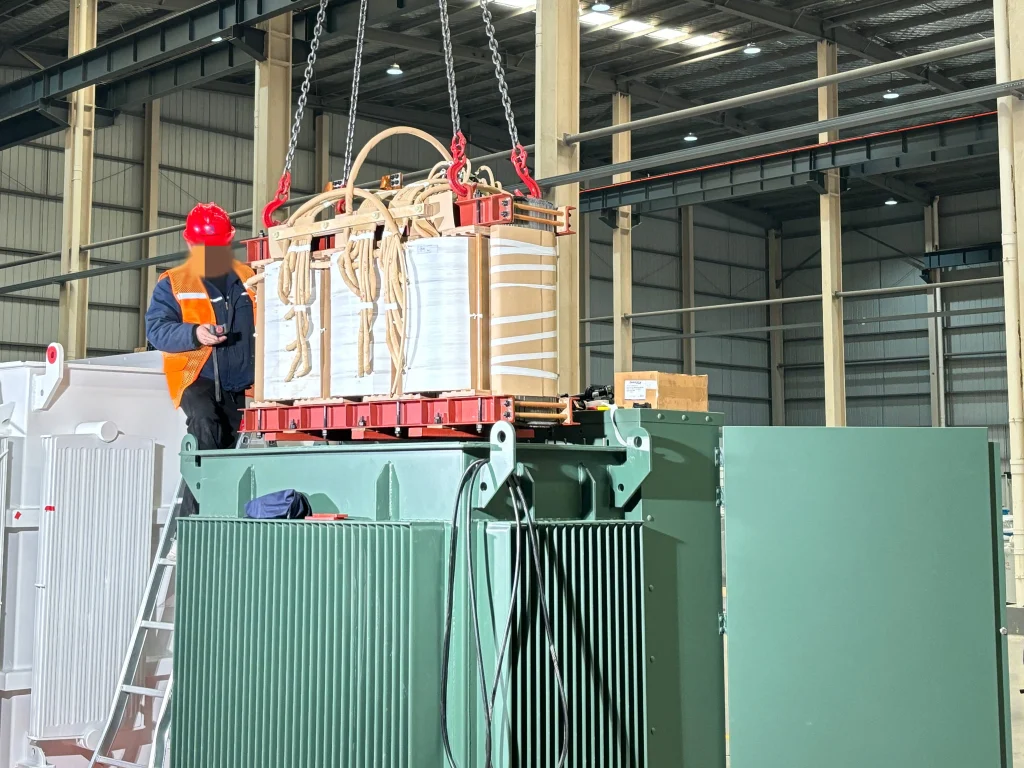
The transformer core and coils are the two most critical components of any transformer. They are responsible for changing voltage levels and ensuring efficient, reliable power transmission. The design of the core and coils directly affects energy losses – such as heat loss – which can reduce overall transformer performance and service life.
Different coil designs offer different advantages. Disc-type coils provide excellent heat dissipation, while layer-type coils offer higher mechanical strength. The shape and structure of the core also affect how efficiently current flows. Understanding how the core and coils work is the first step in choosing the right transformer.
Material Choice Determines Efficiency and Cost
The materials used in the core and coils affect not only transformer efficiency but also long-term operating costs.
Common core materials include silicon steel and amorphous metal. Silicon steel has high strength and can carry more magnetic energy with low losses. It is the most widely used high-performance core material today. Grain-oriented silicon steel is specially treated so that its magnetic properties align in a specific direction, further reducing energy losses and making it ideal for large transformers in power grids. Amorphous metal has a random atomic structure that results in extremely low energy loss during magnetization, making it highly efficient.
For coil materials, copper and aluminum are the two most common choices. Aluminum has lower cost and lighter weight, but its conductivity is not as good as copper. This means more material is required to carry the same current, resulting in larger coil size. Copper has higher cost but offers approximately 60 percent better conductivity than aluminum, which means higher efficiency, smaller size, and lower energy losses.

How the Core and Coils Work Together
The transformer core and coils work together to transfer electrical energy. The core provides a path for the magnetic field, while the coils carry the current that creates that field. Together, they convert electrical energy from one voltage level to another, which is essential for safely powering homes, factories, and equipment.
When current flows through the primary coil, it creates a magnetic field. The core guides this field efficiently to the secondary coil. The secondary coil then outputs a voltage based on the turns ratio. If the secondary coil has fewer turns than the primary coil, the voltage steps down. This is a step-down transformer. If the secondary coil has more turns, the voltage steps up. This is a step-up transformer. Without a properly designed core, most of the energy would be wasted, and transformer efficiency would drop significantly.
Core Designs That Reduce Energy Loss
Transformer core design helps minimize two key types of losses: hysteresis loss and eddy current loss.
Hysteresis loss occurs when magnetic materials consume energy during repeated magnetization and demagnetization. High-quality materials such as grain-oriented silicon steel can effectively reduce this loss. Eddy current loss occurs when circulating currents form inside the core material, generating heat and wasting energy. Laminated cores reduce eddy currents by dividing the core into many thin layers, improving overall efficiency.
Common core designs include shell-type cores, which wrap around the coils to provide strength and reduce magnetic leakage, making them suitable for high-power transformers. Toroidal cores are donut-shaped and reduce energy loss and noise, making them ideal for smaller, low-noise transformers. Laminated cores are made of many thin layers of metal stacked together, effectively reducing eddy currents.
Real-World Applications
Transformer cores and coils are used everywhere, from household electricity to industrial power systems.
Distribution transformers in neighborhoods typically use laminated cores and copper coils to step down grid voltage to safe levels for homes. Power transformers in industrial plants require higher mechanical strength and load capacity, often using layer-type coils and grain-oriented silicon steel cores. Renewable energy projects such as wind farms and solar plants increasingly use amorphous metal cores to reduce energy losses and meet higher system efficiency requirements.
Conclusion
The transformer core and coils are the heart of every transformer. Material choice determines efficiency and cost. Design quality affects losses and service life. While advanced or specially designed materials may have higher upfront costs, they can deliver significant savings over time by reducing energy losses and lowering maintenance needs. Whether for neighborhood distribution, industrial power supply, or renewable energy integration, choosing the right core and coil solution is the key to ensuring efficient and reliable transformer operation.
FAQ
What is the role of transformer core and coils?
The transformer core provides a controlled path for the magnetic field, while the coils carry electrical current to create and receive that magnetic field. Together, they enable efficient voltage conversion from primary to secondary side.
Why are core and coil materials important in a transformer?
Core and coil materials directly affect transformer efficiency, energy losses, size, and cost. High-quality materials such as grain-oriented silicon steel for cores and copper for coils help reduce losses and improve long-term performance.
What is the difference between copper and aluminum coils?
Copper coils offer higher electrical conductivity, better efficiency, and smaller size, but at a higher cost. Aluminum coils are lighter and cheaper but require more material to carry the same current, resulting in larger coil size and slightly higher losses.
How do transformer cores reduce energy loss?
Transformer cores reduce losses through material selection and structural design. Laminated cores help reduce eddy current loss, while high-grade materials like silicon steel or amorphous metal reduce hysteresis loss during magnetization cycles.
Where are different types of transformer core designs used?
Different core designs serve different applications. Laminated cores are widely used in distribution transformers, shell-type cores are used for high-power systems, and toroidal cores are preferred for compact, low-noise applications.