


Choosing the right transformer is a critical decision for industrial projects. Industrial facilities require transformers that can provide reliable power distribution, high efficiency, safe operation, and long service life.
From manufacturing plants and processing facilities to mining sites and large-scale infrastructure projects, the right transformer helps ensure stable electrical performance and reduces unexpected downtime.
This transformer buying guide explains the key factors to consider when selecting a transformer for industrial applications.
1. Understand Your Industrial Power Requirements
Before purchasing a transformer, the first step is to understand your facility’s electrical requirements.
Important factors include:
| Parameter | What to Consider |
|---|---|
| Power Capacity (kVA/MVA) | Determine the total electrical load and future expansion needs |
| Primary Voltage | The incoming voltage from the utility power supply |
| Secondary Voltage | The voltage required by industrial equipment |
| Frequency | Usually 50Hz or 60Hz depending on the region |
| Phase System | Most industrial applications use three-phase power |
| Load Characteristics | Consider motors, machinery, welding equipment, and sensitive electronics |
A correct load calculation helps prevent transformer overload and improves system reliability.
2. Select the Right Transformer Type for Industrial Use
Different industrial environments require different transformer designs.
| Transformer Type | Features | Recommended Applications |
|---|---|---|
| Dry Type Transformer | Uses air cooling and solid insulation; safe and low maintenance | Manufacturing plants, factories, hospitals, data centers, indoor industrial facilities |
| Oil Immersed Transformer | Uses insulating oil for cooling and insulation; excellent heat dissipation | Large industrial plants, outdoor installations, utility systems |
| Power Transformer | Designed for high-voltage and high-capacity applications | Power stations, transmission systems, large industrial projects |
| Substation Transformer | Provides voltage conversion and distribution in substations | Industrial substations, factories, mining operations |
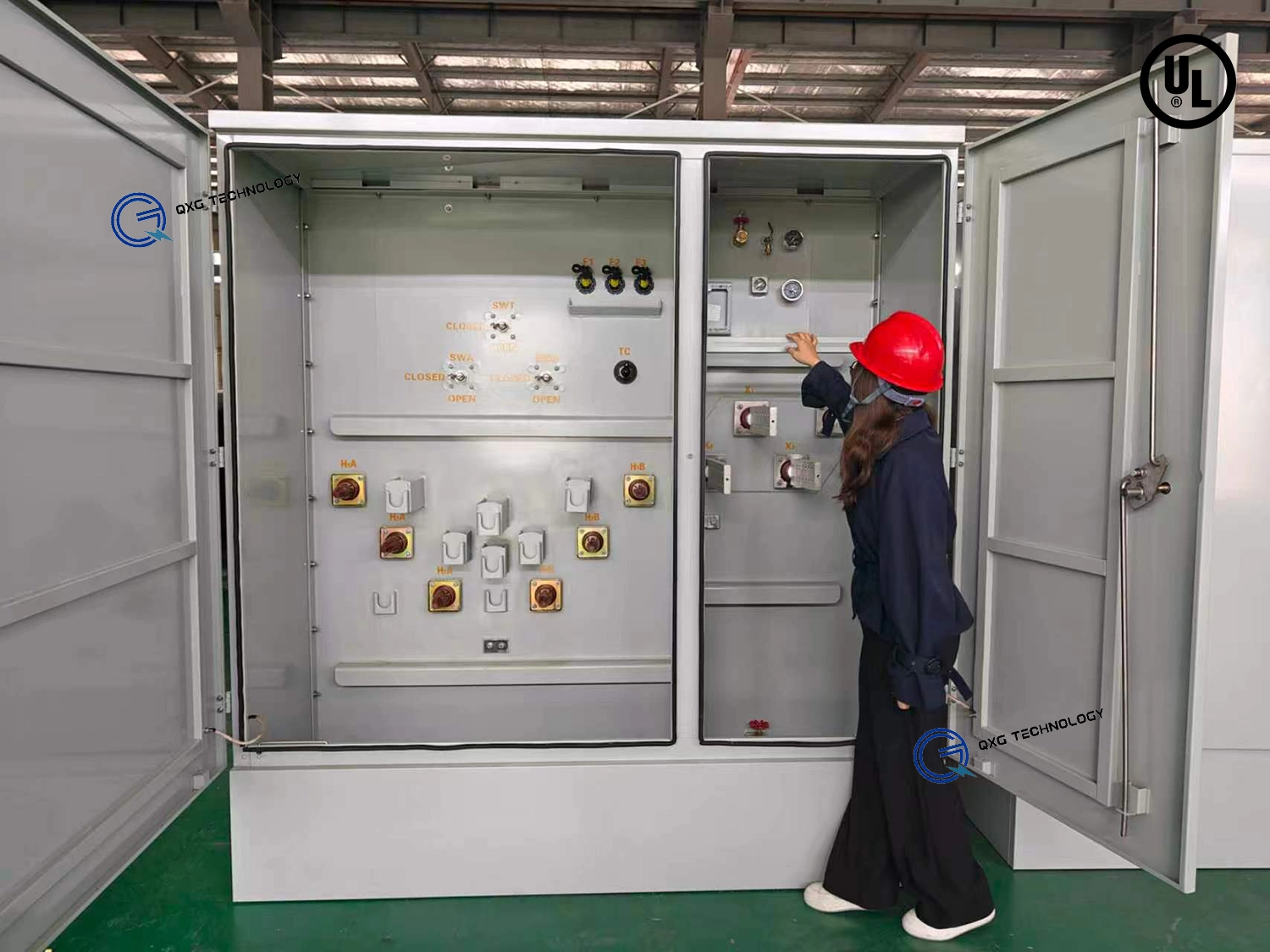
| Pad Mounted Transformer | Ground-mounted design with protective enclosure | Industrial parks, commercial facilities, underground distribution networks |
3. Consider Industrial Operating Conditions
Industrial environments can be demanding. Transformer selection should consider:
| Operating Condition | Selection Consideration |
|---|---|
| High Temperature | Choose transformers with suitable cooling capacity and temperature ratings |
| Dust and Pollution | Consider sealed enclosures and proper protection levels |
| High Humidity | Select materials and designs suitable for moisture resistance |
| Continuous Operation | Choose high-efficiency transformers designed for long-term operation |
| Heavy Mechanical Loads | Ensure the transformer can handle motor starting currents and load fluctuations |
4. Determine the Required Transformer Capacity
Transformer capacity is one of the most important factors in industrial applications.
When calculating capacity, consider:
- Total connected load
- Motor starting requirements
- Power factor
- Load diversity
- Future production expansion
A transformer should not operate continuously at maximum capacity. Selecting additional capacity can improve reliability and extend service life.
5. Evaluate Transformer Efficiency and Energy Losses
Energy costs are a major concern for industrial facilities. Transformer efficiency directly affects long-term operating expenses.
Key efficiency factors include:
No-Load Losses
Energy consumed when the transformer is energized but not supplying power.
Load Losses
Energy losses caused by current flowing through transformer windings.
High-efficiency transformers can help:
- Reduce electricity costs
- Lower energy waste
- Improve overall system efficiency
- Support energy-saving goals
6. Check Safety and Protection Features
Industrial transformers should include appropriate protection systems.
Common protection features include:
| Protection Feature | Function |
|---|---|
| Overcurrent Protection | Protects against excessive current |
| Temperature Monitoring | Prevents overheating |
| Surge Protection | Protects against voltage spikes |
| Short Circuit Protection | Reduces damage during faults |
| Enclosure Protection | Protects internal components from environmental conditions |
Safety requirements may vary depending on industry regulations and installation locations.
7. Choose the Right Transformer Based on Installation Location
| Installation Location | Recommended Transformer Type | Key Considerations |
|---|---|---|
| Indoor Applications | Dry Type Transformer | • High safety and low fire risk • Low maintenance requirements • Suitable for factories, workshops, commercial buildings, and facilities with limited ventilation |
| Outdoor Applications | Oil Immersed Transformer / Pad Mounted Transformer | • Excellent heat dissipation • Weather-resistant design • Suitable for industrial parks, substations, and outdoor power distribution systems |
| Harsh Environments | Specially Designed Industrial Transformers | • Requires protection against dust, moisture, chemicals, and extreme temperatures • Suitable for mining, manufacturing, and heavy industrial applications |
| Space-Limited Areas | Compact Dry Type Transformer / Pad Mounted Transformer | • Space-saving design • Easy installation and maintenance • Suitable for urban industrial projects and commercial facilities |
When selecting an industrial transformer, always consider the installation environment, available space, safety requirements, and operating conditions to ensure reliable long-term performance.
8. Review Maintenance Requirements
Maintenance requirements should be considered before purchasing a transformer.
| Transformer Type | Maintenance Requirements |
|---|---|
| Dry Type Transformer | Regular inspection, cleaning, and ventilation checks |
| Oil Immersed Transformer | Oil testing, leakage inspection, and periodic maintenance |
| Pad Mounted Transformer | Enclosure inspection and connection checks |
| Power Transformer | Professional testing and scheduled maintenance |
Choosing a transformer with suitable maintenance requirements can reduce downtime and operating costs.
9. Consider Transformer Standards and Certifications
Industrial transformers should comply with relevant international standards.
Common standards include:
- IEC standards
- IEEE standards
- ANSI standards
- UL certifications (for applicable markets)
Working with an experienced transformer manufacturer helps ensure product quality, safety, and compliance.
10. Common Mistakes When Buying Industrial Transformers
Avoid these common mistakes:
1. Choosing the Wrong Capacity
An undersized transformer may overheat and fail prematurely.
2. Ignoring Future Expansion
Industrial facilities often increase production capacity. Future load planning is important.
3. Selecting Based Only on Price
A low-cost transformer may result in higher energy losses and maintenance costs.
4. Ignoring Environmental Conditions
Temperature, humidity, dust, and installation location all affect transformer performance.
Industrial Transformer Buying Checklist
Before purchasing a transformer, confirm:
✓ Required voltage ratings
✓ Transformer capacity (kVA/MVA)
✓ Three-phase requirements
✓ Indoor or outdoor installation
✓ Cooling method
✓ Efficiency requirements
✓ Protection features
✓ Applicable standards
✓ Maintenance requirements
✓ Future expansion plans
Conclusion
Selecting the right transformer for industrial applications requires careful consideration of power requirements, installation conditions, efficiency, safety features, and long-term operating costs.
A properly selected transformer can improve power reliability, reduce energy losses, minimize maintenance requirements, and support stable industrial operations.
QXG TECHNOLOGY provides customized transformer solutions for industrial, commercial, and utility applications, including Dry Type Transformers, Oil Immersed Transformers, Power Transformers, and Substation Transformers. If you need professional advice on transformer selection or a customized solution for your project, please contact our team at info@qxgelec.com.
Frequently Asked Questions
1. What type of transformer is commonly used in industrial applications?
Dry type transformers are commonly used indoors, while oil immersed transformers are widely used for outdoor and high-power industrial applications.
2. How do I calculate the transformer size for an industrial facility?
Transformer size depends on total load demand, motor starting requirements, power factor, and future expansion plans.
3. Are dry type transformers suitable for factories?
Yes. Dry type transformers are suitable for many factories because they offer high safety, low maintenance, and reliable indoor operation.
4. How long can an industrial transformer last?
With proper design and maintenance, industrial transformers can typically operate for 20–30 years or longer.
5. Can industrial transformers be customized?
Yes. Transformers can be customized according to voltage levels, capacity, installation environment, cooling methods, and specific project requirements.