


As critical external components of power transformers, bushings serve as the essential transition structure for power lines to pass through the transformer tank. They undertake dual missions of electrical conduction and insulation isolation, directly affecting the operational safety, stability and service life of the entire equipment. Selecting properly matched bushings and understanding their classification and application characteristics are essential links in transformer design, manufacturing and on-site deployment. This article elaborates on the core functions, selection principles and mainstream classifications of transformer bushings in detail.
Core Functions of Transformer Bushings
Transformer bushings act as the penetration passage for incoming and outgoing cables. They run through the metal enclosure or oil tank of the transformer, connecting external power cables with internal windings and iron cores.
In operation, bushings form a reliable insulated channel for conducting current. They effectively isolate the live conductor from the grounded transformer tank and surrounding facilities, preventing electric leakage, short circuits and personal electric shock accidents. With excellent insulation performance and structural stability, bushings ensure the safe and continuous transmission of electric energy inside and outside the transformer.
Core Criteria for Bushing Selection
There is no one-size-fits-all bushing for all operating scenarios. To achieve optimal matching with transformers and power systems, four key factors must be fully evaluated during model selection:
- Rated Voltage Match the bushing rated voltage to the operating voltage level of the transformer and the power distribution system, to ensure it can withstand long-term operating voltage and instantaneous overvoltage impact.
- Rated Current Determine the current carrying capacity of the bushing according to the continuous operating current and peak current at the cable connection point, avoiding overheating and aging caused by overload operation.
- Mechanical Performance Requirements Consider various physical stresses that the bushing will bear in actual operation, including structural tension, vibration, torque and external impact, to guarantee long-term mechanical reliability.
- Overall System Layout Combined with the overall design of the power system, confirm the installation environment (indoor or outdoor), specific installation position on the transformer and the layout of peripheral facilities, so as to select products adapting to the on-site operating conditions.

Main Classification and Application Scenarios of Bushings
According to structural forms, insulation modes and safety characteristics, transformer bushings are mainly divided into two major categories: dead-front bushings and live-front bushings. Their structural features, applicable voltage levels and usage scenarios differ obviously.
1. Dead-Front Bushings
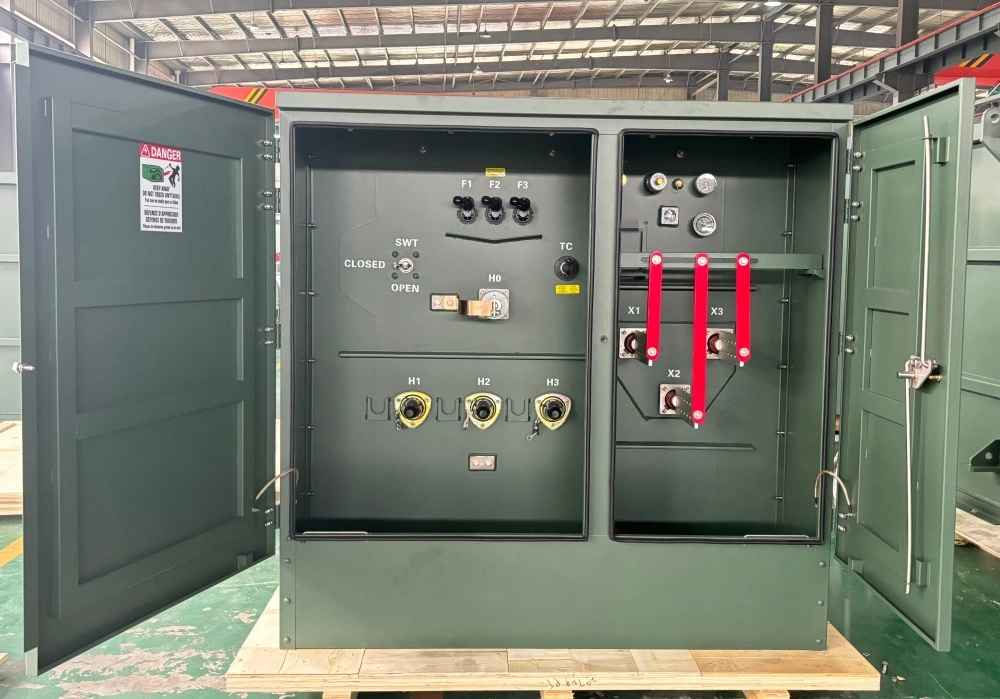
Dead-front bushings adopt fully enclosed insulated terminal design. This structure greatly lowers the risk of arc flash, so it is widely applied to the primary side of pad-mounted transformers in urban and rural distribution networks.
This type of bushing can be further divided into two specifications based on current rating and switching performance:
Loadbreak Bushing (200A): It supports load breaking operation. Operators can complete line disconnection with hot sticks under live conditions, which brings great convenience for on-site maintenance.
Deadbreak Bushing (600A): It is not allowed to perform load breaking at the bushing position, and professional power-off operation procedures are required for line switching.
Core Advantages: High operational safety with effectively controlled arc flash hazards; meanwhile, it occupies smaller space and requires lower air insulation clearance, which is friendly to compact installation layouts.
2. Live-Front Bushings
Live-front bushings feature exposed conductive terminals without full enclosure insulation. This structure is mainly targeted at high-voltage power transmission and distribution scenarios, commonly used for substation transformers, pole-mounted transformers and the high-voltage side of pad-mounted transformers.
It is classified into two structural types according to internal insulation structure:
Solid Bushing: Featuring a simple structure, it takes epoxy resin or porcelain as the main insulation material wrapping the internal conductor, with stable performance and easy maintenance.
Condenser Bushing: It adopts multi-layer composite insulation structure filled with oil-impregnated paper or resin-impregnated paper. This type is mostly used on transformers with a voltage level above 25 kV. It is equipped with a dedicated test tap, which facilitates real-time performance detection and fault diagnosis during equipment operation.
Core Advantages: It is the most economical and practical solution for power equipment with voltage above 35 kV, and performs stably in long-term high-voltage operating environments.
Conclusion
Transformer bushings are indispensable insulation and connection components that determine the safety, compatibility, and operational reliability of the entire power distribution system. Each type of bushing is structurally optimized for specific voltage levels, current loads, mechanical conditions, and installation environments. Dead-front bushings focus on operational safety and compact layouts for medium-voltage distribution scenarios, while live-front bushings provide robust structural and dielectric performance for high-voltage and substation-grade applications. Proper selection between solid and condenser designs further improves equipment stability and simplifies future maintenance. QXG provides reliable transformer bushing solutions designed to meet diverse application requirements, helping engineers select suitable components for each project and ensuring long-term stable, safe, and efficient transformer operation across industrial, commercial, and utility environments.