


Choosing the right transformer is essential for ensuring a safe, reliable, and efficient power supply system. The correct transformer selection depends on factors such as voltage requirements, power capacity, installation environment, and application type.
Whether you are designing an industrial facility, commercial building, renewable energy project, or utility system, understanding how to select the right transformer can help reduce energy losses, improve system performance, and avoid unnecessary costs.
1. Understand Your Project Power Requirements
The first step in choosing a transformer is understanding your project’s electrical requirements.
Key factors include:
| Parameter | Description |
|---|---|
| Voltage Rating | The input and output voltage levels required by your system |
| Power Capacity (kVA/MVA) | The amount of electrical power the transformer needs to handle |
| Frequency | Usually 50Hz or 60Hz depending on the region |
| Phase Type | Single-phase or three-phase power supply |
| Load Type | Residential, commercial, industrial, or special equipment loads |
A transformer that is too small may experience overheating and reduced lifespan, while an oversized transformer can increase initial costs and reduce efficiency.
2. Determine the Required Transformer Capacity
Transformer capacity is usually measured in kVA (kilovolt-amperes) or MVA (megavolt-amperes).
To select the correct capacity, consider:
- Current electrical load
- Future expansion requirements
- Starting current of equipment
- Power factor
- Load growth expectations
For example:
- Small commercial buildings may require transformers from hundreds of kVA.
- Industrial plants may need transformers rated in MVA.
- Utility applications often require larger power transformers.
It is recommended to select a transformer with some additional capacity to support future growth.
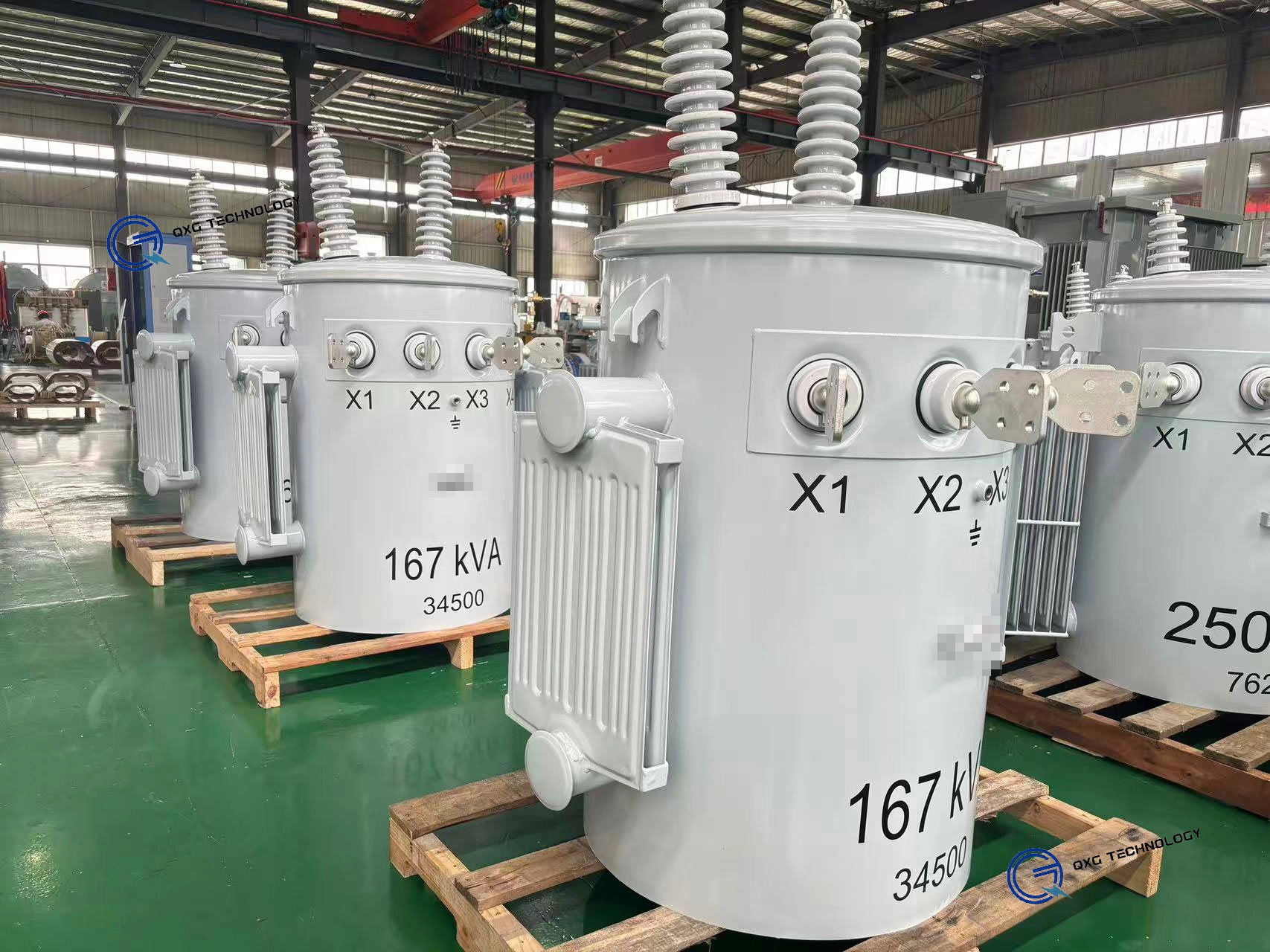
3. Choose the Right Transformer Type
Different projects require different transformer designs. The right transformer type depends on the installation location, power requirements, safety requirements, and application environment.
| Transformer Type | Main Features | Advantages | Common Applications |
|---|---|---|---|
| Dry Type Transformer | Uses air as the cooling and insulation medium instead of oil | • Fire-safe and environmentally friendly • Low maintenance • Suitable for indoor installation | • Commercial buildings • Hospitals • Data centers • Schools • Industrial facilities |
| Oil Immersed Transformer | Uses insulating oil for cooling and insulation | • High efficiency • Excellent heat dissipation • Suitable for high-power applications | • Utility substations • Power grids • Industrial plants • Outdoor power systems |
| Pad Mounted Transformer | Ground-mounted transformer installed inside a protective enclosure | • Safe outdoor installation • Compact design • Suitable for underground distribution systems | • Residential communities • Commercial developments • Renewable energy projects |
| Pole Mounted Transformer | Transformer installed on utility poles for overhead distribution | • Space-saving design • Cost-effective solution • Easy installation for distribution networks | • Rural power networks • Residential areas • Utility distribution systems |
| Power Transformer | Large-capacity transformer used for high-voltage transmission systems | • Handles high power loads • Reliable long-distance power transmission | • Power plants • Transmission substations • Large industrial projects |
| Substation Transformer | Designed for voltage conversion in electrical substations | • Reliable voltage regulation • Suitable for grid and distribution systems | • Utility substations • Commercial power networks • Industrial facilities |
In general:
- Choose a Dry Type Transformer for indoor applications requiring high safety and low maintenance.
- Choose an Oil Immersed Transformer for outdoor and high-power applications.
- Choose a Pad Mounted Transformer for underground distribution systems.
- Choose a Pole Mounted Transformer for overhead power distribution.
- Choose a Power Transformer or Substation Transformer for utility and large-scale power projects.

4. Consider the Installation Environment
The installation location has a major impact on transformer selection.
Indoor Installation
Recommended options:
- Dry type transformers
- Compact transformers
Important considerations:
- Ventilation
- Noise level
- Fire safety requirements
Outdoor Installation
Recommended options:
- Oil immersed transformers
- Pad mounted transformers
- Pole mounted transformers
Important considerations:
- Weather resistance
- Temperature range
- Protection enclosure
- Environmental conditions
5. Check Efficiency and Energy Losses
Transformer efficiency directly affects operating costs.
Important factors include:
No-load Losses
Energy consumed when the transformer is energized but not supplying power.
Load Losses
Energy losses caused by current flowing through transformer windings.
High-efficiency transformers can:
- Reduce electricity costs
- Lower energy waste
- Improve long-term performance
For projects with continuous operation, selecting an energy-efficient transformer can provide significant savings.
6. Consider Safety and Protection Requirements
Safety is an important factor when selecting a transformer.
Depending on the application, you may need:
- Overcurrent protection
- Short-circuit protection
- Temperature monitoring
- Surge protection
- Fire protection features
For sensitive environments such as hospitals, data centers, and commercial buildings, safety requirements should be carefully evaluated.
7. Evaluate Maintenance Requirements
Different transformer types have different maintenance needs.
| Transformer Type | Maintenance Requirements |
|---|---|
| Dry Type Transformer | Low maintenance, mainly inspection and cleaning |
| Oil Immersed Transformer | Requires oil testing and periodic inspection |
| Pad Mounted Transformer | Requires enclosure and connection checks |
| Pole Mounted Transformer | Requires regular outdoor inspections |
Choosing a transformer with suitable maintenance requirements can reduce operating costs over the equipment lifetime.
8. Consider Standards and Certifications
A reliable transformer should meet applicable industry standards.
Common standards include:
- IEEE standards
- IEC standards
- ANSI standards
- UL certifications (for applicable markets)
Working with an experienced transformer manufacturer ensures that products meet required safety and performance specifications.
9. Common Mistakes When Choosing a Transformer
Avoid these common selection mistakes:
Choosing Insufficient Capacity
A transformer with insufficient capacity may overheat and fail prematurely.
Ignoring Future Expansion
Projects often require additional power in the future. Selecting extra capacity can prevent costly replacement.
Selecting the Wrong Transformer Type
Using an indoor transformer outdoors or choosing an unsuitable cooling method may affect performance and safety.
Focusing Only on Initial Cost
The cheapest transformer may have higher operating costs due to energy losses and maintenance requirements.
10. Transformer Selection Checklist
Before purchasing a transformer, confirm:
✓ Required input and output voltage
✓ Power capacity (kVA/MVA)
✓ Single-phase or three-phase system
✓ Installation location
✓ Indoor or outdoor requirements
✓ Cooling method
✓ Efficiency requirements
✓ Safety standards
✓ Future load expansion plans
Conclusion
Choosing the right transformer requires careful consideration of power requirements, application conditions, installation environment, and long-term operating costs.
The best transformer is not always the largest or the cheapest option. It is the one that matches your project’s electrical needs, provides reliable performance, and delivers efficient operation throughout its service life.
QXG TECHNOLOGY offers customized transformer solutions for commercial, industrial, and utility applications. From dry type transformers to oil immersed transformers and distribution transformers, we help customers select the right power solution for their projects.
Email: info@qxgelec.com
Frequently Asked Questions (FAQ)
1. How do I know what size transformer I need?
The required transformer size depends on your total electrical load, voltage requirements, power factor, and future expansion plans. A professional load calculation is recommended.
2. What type of transformer is best for indoor use?
Dry type transformers are commonly used for indoor applications because they are fire-resistant, environmentally friendly, and require less maintenance.
3. What is the difference between dry type and oil immersed transformers?
Dry type transformers use air insulation and are often used indoors, while oil immersed transformers use insulating oil and are commonly used for higher-power outdoor applications.
4. How long does a transformer usually last?
A properly designed and maintained transformer can typically operate for 20–30 years or longer depending on operating conditions.
5. Can transformers be customized for specific projects?
Yes. Transformer manufacturers can customize voltage ratings, capacity, cooling methods, enclosure designs, and other specifications based on project requirements.