


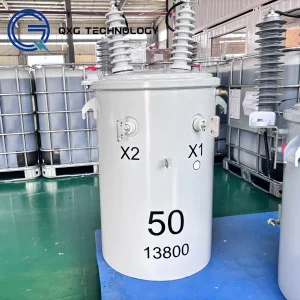
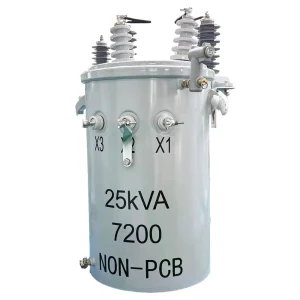
Pole mounted transformers play an essential role in modern electrical distribution systems by stepping down medium-voltage electricity to usable low-voltage levels for residential, commercial, and light industrial users. Mounted directly on utility poles, they are widely used because they are cost-effective, easy to install, and adaptable to different environments.
Overview and Basic Function
A pole mounted transformer is installed on overhead distribution poles and converts higher transmission voltages (such as 11kV or 33kV) into standard utilization voltages like 230V or 400V. This allows safe electricity delivery to end users while reducing the need for large ground-based substations.
Because they are elevated, they are less exposed to flooding and ground-level damage, and they integrate easily into existing overhead distribution networks.
Rural Applications
In rural areas, pole mounted transformers are often the most practical solution for electrification due to long distances between users and low population density.
They are widely used to bring electricity to remote villages and scattered households where underground systems would be too expensive. In agricultural regions, they support irrigation pumps, grain processing equipment, cold storage facilities, and livestock operations, all of which depend on stable power supply.
They also help power essential rural infrastructure such as schools, clinics, water supply systems, and small workshops, making them a key component in rural development and electrification projects.
Urban and Suburban Applications
In urban and suburban environments, pole mounted transformers are commonly used in residential neighborhoods and expanding city outskirts. They supply electricity to clusters of homes through overhead distribution lines, making them a practical choice for developing housing areas.
They are also used to support street lighting systems, ensuring stable voltage supply for road safety and public lighting networks. In small commercial zones, they provide power to shops, offices, and restaurants where demand is moderate and does not require large substations.
Additionally, they are frequently used in construction areas, where temporary and flexible power supply is needed for equipment, site offices, and lighting systems.
Key Advantages in Power Distribution
The widespread use of pole mounted transformers is mainly due to their cost efficiency and simplicity. They require less installation work compared to underground systems and can be deployed quickly using existing utility poles.
Their design saves ground space, making them suitable for both crowded urban streets and open rural land. Maintenance is also easier since they are accessible above ground, allowing faster inspection and repair.
They are highly scalable, meaning additional units can be installed as electricity demand grows without major changes to the distribution network. This flexibility makes them suitable for both expanding cities and developing rural regions.
Conclusion
Pole mounted transformers remain a practical and widely adopted solution for electrical power distribution in both rural and urban environments. Their ability to efficiently step down voltage, combined with low cost, simple installation, and flexible deployment, makes them a core part of modern power systems.
From remote agricultural areas to growing urban communities, they ensure stable and reliable electricity supply, supporting both daily life and economic development.