


As power distribution systems continue to evolve, increasing attention is being paid to equipment safety, environmental impact, and lifecycle operating costs. In this context, a key trend in the transformer sector is the growing adoption of dry-type transformers, which are rapidly replacing traditional oil-filled transformers in many indoor and safety-sensitive applications.
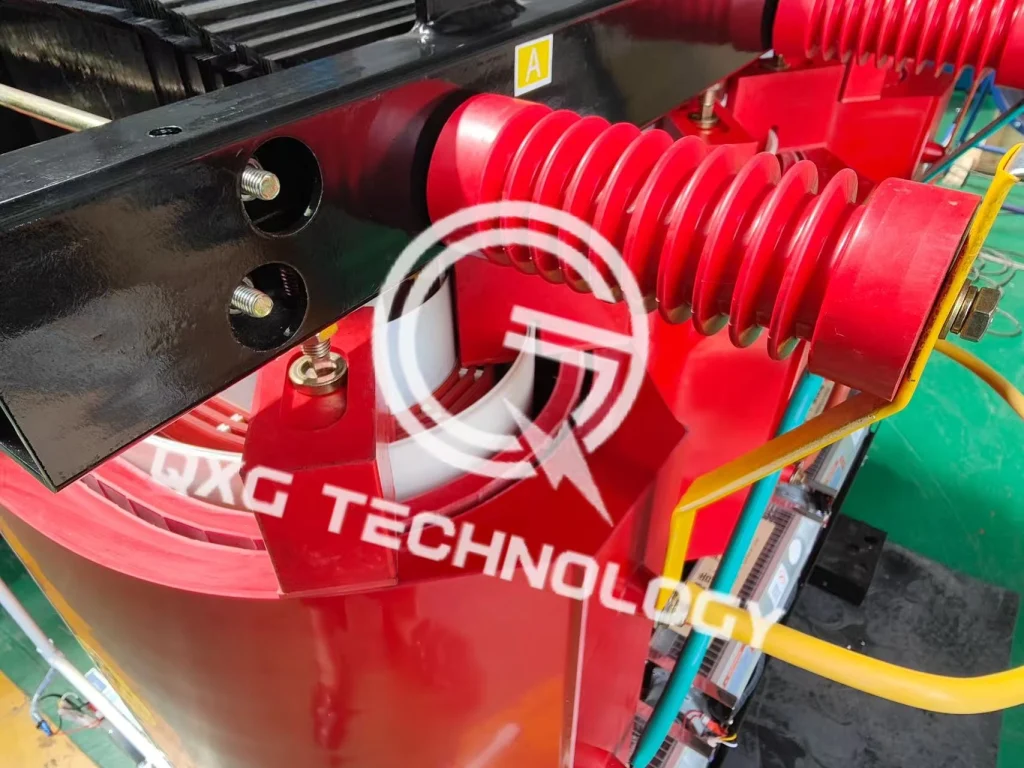
Dry-type transformers are air-cooled devices that use solid insulation materials instead of liquid insulating oil. Thanks to their inherent fire safety, environmental friendliness, and simplified maintenance requirements, they are now widely installed in schools, hospitals, shopping malls, office buildings, data centers, industrial plants, and other locations where operational safety and cleanliness are critical.
Excellent Fire Safety Performance
One of the most significant advantages of dry-type transformers is their superior fire safety:
They use flame-retardant and self-extinguishing epoxy resin insulation systems and contain no flammable oil medium, effectively eliminating the risks of oil fire, explosion, and oil spray under fault conditions.
In the event of internal faults or overheating, dry-type transformers are designed to limit flame spread and smoke generation, improving overall fire safety performance.
Their oil-free design makes them particularly suitable for densely populated areas and indoor installations, often eliminating the need for expensive fire walls, oil pits, or special fire suppression systems.
Strong Environmental Adaptability
Dry-type transformers are engineered to operate reliably under a wide range of environmental conditions:
Their insulation systems are designed to resist moisture, dust, and airborne contaminants, ensuring stable electrical performance in humid, polluted, or dusty environments.
The robust insulation structure provides high mechanical strength and excellent short-circuit withstand capability, helping the transformer maintain integrity during electrical faults.
Advanced impregnation and casting processes improve thermal stability and reduce partial discharge, contributing to longer service life and consistent performance.
Minimal Maintenance Requirements
Compared with oil-filled transformers, dry-type transformers offer significantly reduced maintenance demands:
There is no need to monitor oil levels, oil quality, or dissolved gas content, completely avoiding oil leakage, oil aging, and oil replacement issues.
Routine maintenance typically consists of visual inspections, cleaning of cooling air paths, and periodic insulation resistance or partial discharge testing.
The simplified maintenance regime helps reduce operating costs, minimizes downtime, and lowers long-term total cost of ownership.
Eco-Friendliness and Sustainability
Environmental protection is an increasingly important factor in modern electrical infrastructure, and dry-type transformers offer clear advantages in this area:
The absence of insulating oil eliminates the risk of soil and groundwater contamination, making them ideal for environmentally sensitive locations.
Quiet operation and clean air-cooling systems support green building standards and improve the indoor working environment.
Many dry-type transformer designs are compatible with recyclable materials and energy-efficient core structures, supporting sustainability and carbon-reduction initiatives.
Flexible Installation and Configuration
Dry-type transformers provide greater flexibility for system designers and facility planners:
Their relatively compact size and modular structure make them suitable for installation in switchrooms, electrical closets, and other spaces with limited footprint.
Optional features such as forced-air cooling systems, temperature monitoring devices, and on-load or off-circuit tap changers can be configured to meet specific load and voltage regulation requirements.
Their indoor-friendly design allows transformers to be located closer to load centers, reducing cable losses and improving overall system efficiency.

Typical Applications of Dry-Type Transformers
Due to their unique advantages, dry-type transformers are widely used in:
Commercial buildings (office towers, shopping centers, hotels)
Public facilities (schools, hospitals, airports, subway stations)
Data centers and communication facilities
Industrial plants with strict fire and environmental requirements
Renewable energy systems and distributed power installations
Conclusion
From the advantages outlined above, it is clear that dry-type transformers have become a safe, eco-friendly, and low-maintenance preferred solution in modern power distribution systems. With proper selection, correct installation, and regular preventive maintenance, dry-type transformers can deliver long-term stable performance and high operational reliability. For projects that prioritize safety, environmental protection, and lifecycle cost efficiency, dry-type transformers represent a highly competitive and future-proof choice.